
Hanging Toilet Paper Facing Forward or Backward: What Is the Correct Way?
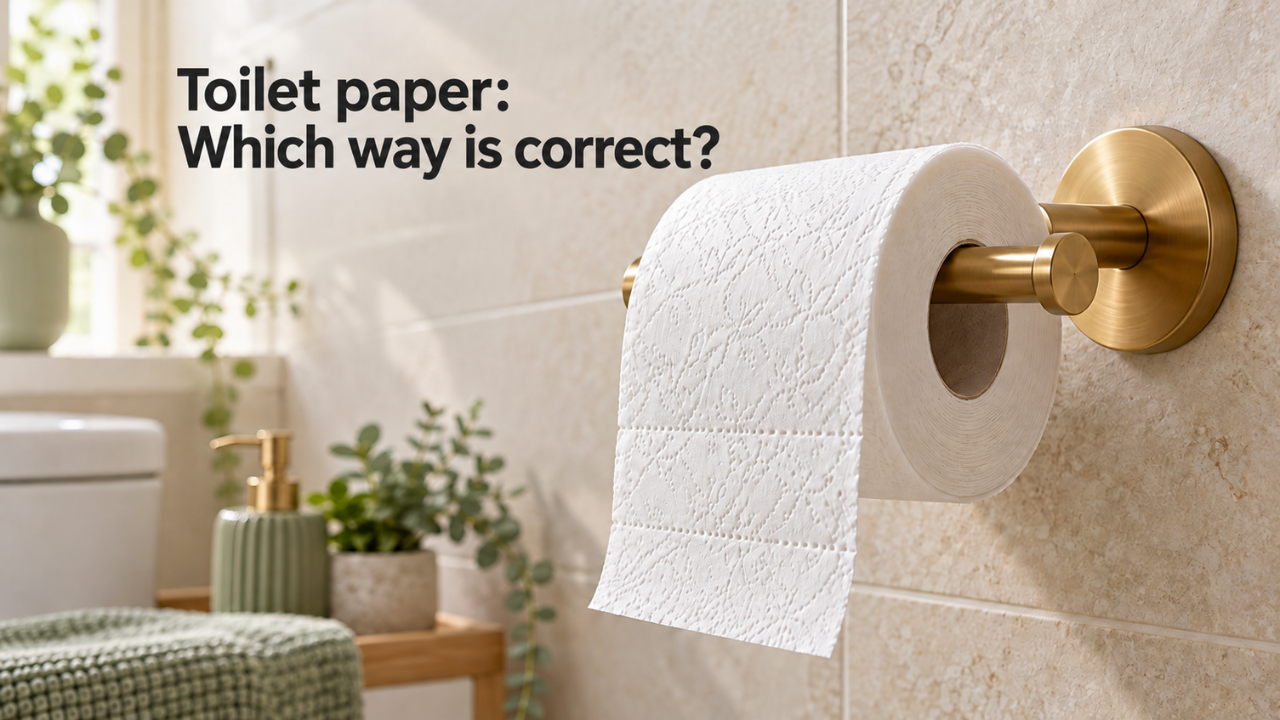
The way toilet paper hangs on a bathroom holder may seem like a minor household detail, but it has sparked debate in homes for generations. Some people prefer the loose end to hang over the front of the roll, while others position it toward the wall. Although both arrangements can work, experts generally recommend hanging toilet paper with the paper coming over the top and falling toward the front.
The main reasons are convenience, accessibility, and the possibility of reducing unnecessary contact with nearby bathroom surfaces. However, the direction of the roll is only one small part of maintaining a clean and hygienic bathroom.
So, which position makes more sense? Here is what experts say about the forward-versus-backward debate and the practical reasons behind their recommendation.
Why Do Specialists Recommend Hanging Toilet Paper Forward?
One of the main arguments for hanging toilet paper forward is that the loose end remains visible and easier to reach. This arrangement allows people to identify the next sheet quickly without having to reach behind the roll or handle the holder unnecessarily.
Hygiene is another consideration. Christian Moro, an associate professor of health sciences and medicine at Bond University in Australia, has discussed the importance of limiting contact with potentially contaminated surfaces when maintaining a hygienic environment.
When the paper hangs over the front, it may remain farther from the wall, depending on the design of the holder. This can reduce the likelihood of touching the wall while searching for the loose end or pulling off a sheet.
Bathroom surfaces can collect microorganisms through everyday use. These may include bacteria such as Streptococcus, Staphylococcus and E. coli, along with certain viruses and other pathogens. The presence of these microorganisms does not automatically mean that someone will become ill, but sensible hygiene practices can help limit unnecessary exposure.
It is important to understand that hanging toilet paper forward does not eliminate germs or guarantee a cleaner bathroom. The actual level of hygiene depends on several factors, including handwashing, regular cleaning, the condition of the holder and how people use the bathroom.
Nevertheless, keeping the loose end accessible can make everyday use simpler while potentially reducing contact with surrounding surfaces.
What Is the Correct Way to Hang Toilet Paper?
The generally recommended position is to place the roll so that the paper comes over the top and hangs down toward the front. In this arrangement, the loose end is visible rather than resting between the roll and the wall.
There are several practical advantages to this position.
The paper is easier to find. Because the loose end remains visible, users can quickly identify where to pull without searching around the back of the roll.
Tearing off sheets is more convenient. The front-facing arrangement often makes it easier to pull down the paper and separate a sheet, particularly when the holder has a simple horizontal bar.
Contact with nearby surfaces may be reduced. Depending on the holder’s design, users may be less likely to touch the wall when reaching for the paper.
The roll can be easier to manage. In many bathrooms, a front-facing loose end makes it simpler to handle the paper without moving the entire roll or reaching into a narrow space.
The recommendation also has a historical connection. In 1891, Seth Wheeler, an inventor associated with perforated toilet paper, filed a patent that illustrated a roll with the loose end hanging over the top.
This historical illustration supports the idea that the forward-facing arrangement was part of the product’s early design. However, it does not establish a binding rule that every household must follow.
Ultimately, the most practical position depends partly on the type of holder, the available space and the preferences of the people using it.
What Happens When Toilet Paper Hangs Backward?
When toilet paper hangs backward, the loose end falls between the roll and the wall. This arrangement can make the paper slightly harder to locate, especially if the end folds against the wall or becomes difficult to distinguish from the surrounding surfaces.
Depending on the holder, users may need to reach behind the roll, move it around or touch nearby areas to pull the paper free.
These additional movements can make the process less convenient. They may also increase contact with the wall or holder, although the extent of that contact varies considerably from one bathroom to another.
However, hanging toilet paper backward does not automatically make it unhygienic. If the holder is clean, the bathroom is maintained properly and users practise good hand hygiene, the orientation alone is unlikely to be the most important factor affecting cleanliness.
For some people, the backward position may even work better with a particular holder or in a bathroom where space is limited. In such cases, practical considerations may outweigh the usual preference for a forward-facing roll.
The key distinction is between convenience and proven health benefits. A forward-facing roll is generally easier to access, but there is limited direct evidence that the direction of the paper alone produces a meaningful difference in infection risk.
Does Toilet Paper Orientation Really Affect Bathroom Hygiene?
Bathroom hygiene depends on much more than the direction in which toilet paper hangs. Although the forward-facing position can reduce certain types of unnecessary contact, it should not be treated as a substitute for regular cleaning or proper handwashing.
Frequently touched surfaces, such as taps, flush handles, door handles and toilet holders, can collect microorganisms during everyday use. Cleaning these areas regularly is more important than focusing exclusively on the direction of a toilet paper roll.
The following habits can help maintain a cleaner bathroom:
- Wash your hands thoroughly. Use soap and running water after using the toilet, and dry your hands with a clean towel or another suitable method.
- Clean the toilet holder regularly. Wipe down the holder and its surrounding surfaces, particularly if several people use the same bathroom.
- Avoid unnecessary contact. Try not to touch the wall or nearby fixtures when pulling off toilet paper.
- Replace rolls with clean hands. When changing an empty roll, avoid placing the new paper on dirty surfaces.
- Maintain regular bathroom cleaning. Pay attention to high-touch areas, the toilet seat, flush controls and door handles.
- Keep spare toilet paper protected. Store unused rolls in a clean, dry location away from splashes and other sources of contamination.
These simple measures address several potential sources of contamination and are useful regardless of how the toilet paper is positioned.
Which Position Is Better for Different Toilet Paper Holders?
The best arrangement can also depend on the holder’s design. Not all bathroom fixtures provide the same amount of space, and some work more naturally with one orientation than the other.
Open horizontal holders: These commonly work well with the paper hanging over the front. The loose end remains visible, making it easy to pull down and tear off a sheet.
Recessed toilet paper holders: These are installed inside a wall or a small enclosure. Depending on their shape, the available space may influence which direction allows the paper to move freely.
Covered holders: Some models have a lid or protective cover. The design of the cover may determine whether the paper can be pulled smoothly from the front or back.
Freestanding holders: These usually allow more flexibility because they can be repositioned. Users can choose the orientation that offers the easiest access and keeps the paper away from nearby surfaces.
If the paper frequently tears unevenly, gets trapped or becomes difficult to pull, try changing its orientation. The goal is to find a position that allows the roll to turn smoothly without unnecessary handling.
Should You Change the Direction of Your Toilet Paper?
If your toilet paper currently hangs backward, there is no need to panic or assume that your bathroom is unhygienic. Changing the direction is a simple adjustment that may make the roll easier to use, but it is not an essential health measure.
For most standard holders, positioning the loose end over the front is a sensible default. It keeps the paper visible and accessible and may help limit contact with nearby surfaces.
However, personal preference, accessibility needs and the holder’s design also matter. A household does not need to treat the direction of the toilet paper as a strict hygiene rule.
If changing the orientation makes the paper easier to reach, it is worth trying. If the backward position works better with a particular fixture, maintaining good bathroom hygiene is still far more important than changing the roll simply to follow a convention.
Conclusion
When deciding whether to hang toilet paper facing forward or backward, the forward-facing position is generally the more practical choice. It keeps the loose end visible, makes the paper easier to pull and may reduce unnecessary contact with the wall, depending on the holder’s design.
However, there is no strong evidence that the direction of a toilet paper roll alone has a major effect on infection risk. Regular bathroom cleaning, proper handwashing and careful handling of frequently touched surfaces remain the most important hygiene practices.
In the end, hanging toilet paper forward is a useful everyday preference rather than an absolute rule. Choose the arrangement that works best for your holder, and focus on the habits that genuinely help keep your bathroom clean.

Jante Smith is a creative and dedicated content writer who loves turning ideas into clear and engaging stories. She writes blog posts and articles that connect with readers. She ensures every piece of content is well-structured and easy to understand. Her writing helps our brand share useful information and build strong relationships with our audience.