
11 Parenting and Wisdom Stories Where Kindness Hides in Coffee Cups, Shared Cookies, and a Long Drive Through Loneliness
Kindness rarely arrives when we expect it. Sometimes, it appears in a stranger’s thoughtful words, a few extra cookies in a child’s lunchbox, or a parent who drives miles every weekend simply because an empty house has become too quiet. These gestures may look ordinary from the outside, but for someone struggling with loneliness, they can become moments that change how they see themselves and the world around them.
Research into social connection, including work by UCLA neuroscientist Naomi Eisenberger, has explored how social rejection can activate brain regions associated with physical pain. This helps explain why loneliness can feel so difficult and why being noticed, welcomed, or treated with compassion can bring meaningful relief.
The following 11 stories explore the powerful connection between everyday kindness, family relationships, parenting, and human dignity. Each reminds us that people do not always need grand gestures or perfect advice. Sometimes, they simply need someone willing to notice, listen, share, or stay a little longer.
1. The Birthday Messages That Waited Nine Years for a Reply
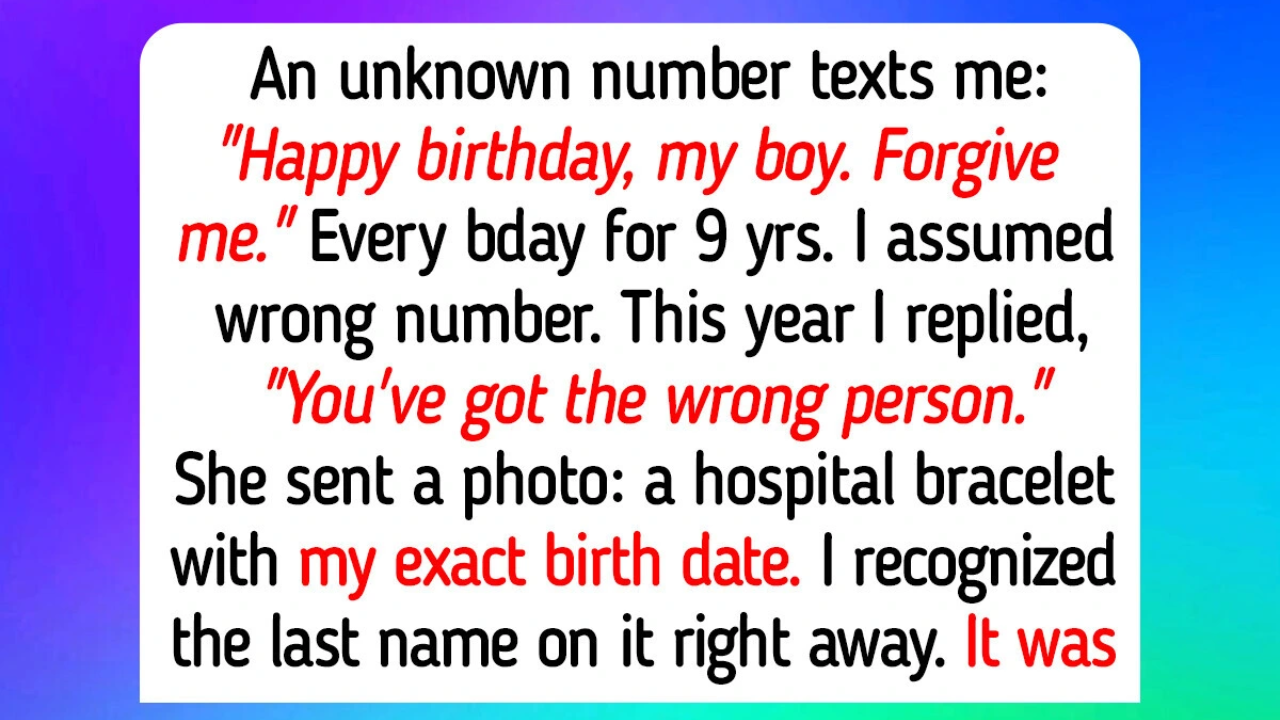
For nine years, a young man received the same birthday message from an unfamiliar phone number: “Happy birthday, my boy. Forgive me.”
He assumed the sender had the wrong number and ignored the message every year. It seemed unusual, but not unusual enough to investigate. Then, on his next birthday, he decided to reply and explain the mistake.
The response changed everything. The woman sent him a photograph of a hospital bracelet displaying his exact birth date. The surname on it, Mercer, was familiar from the adoption paperwork his mother had kept in a blue folder.
He had always known he was adopted at three days old, but he had never felt ready to search for his biological family.
When he called his mother, she explained that an adoption agency had contacted her nine years earlier. A woman named Diane Mercer had wanted to establish contact. Because he was struggling during his first year of college, his mother had provided his number but requested that Diane not call or appear unexpectedly.
His mother wanted the decision to remain his. When he never mentioned the messages, she assumed he had chosen not to respond.
Diane had respected that distance. She never demanded an explanation or repeatedly called him. Instead, she sent one birthday message every year and waited.
When he finally asked what she wanted him to forgive, Diane explained that she had been only 16 when she gave birth to him. She felt alone and unable to raise a child, so she chose an adoptive family she believed could offer him stability and love. Every birthday, she wondered whether her decision had hurt him.
He told her about the father who taught him to fish and the mother who never missed a game. His childhood had been filled with love, and he wanted Diane to know that.
Her reply was simple: that was all she had ever wanted to hear.
He was not ready to meet her in person, but he no longer saw those messages as mistakes. Behind them was someone who had carried a private worry for years.
The story reminds us that kindness can begin with listening. It also shows that compassion does not require rushing into a relationship or abandoning personal boundaries. Sometimes, one honest conversation is enough to begin understanding another person’s story.
2. The Barista Who Made a Lonely Customer Feel Seen
At 40, one person moved to a new city and discovered that starting over could be much lonelier than expected. The apartment contained one chair, one mug, and long evenings filled with silence. There were no familiar friends nearby and nobody waiting for a message at the end of the day.
Every morning, the person visited the same coffee shop, ordered the same drink, and sat in the same seat. The routine provided structure, but the customer still felt invisible.
After six weeks, the barista did something unexpected. Instead of writing the customer’s name on the cup, she wrote, “You look like you need a good day. This one’s on me.”
The customer stared at the words for several minutes. The free coffee was welcome, but the real gift was the feeling of being noticed.
The barista did not know about the empty apartment or the difficult adjustment to a new city. She simply recognized someone who appeared to need a little encouragement and responded without making a big production of it.
The customer kept returning. Over time, brief exchanges became conversations, and those conversations developed into a genuine friendship.
The moment demonstrated that people do not always need us to understand every detail of their lives before we can offer kindness. A warm greeting or thoughtful message may seem small to the person giving it, yet it can mean much more to someone who has spent weeks feeling forgotten.
The barista could not remove every difficulty associated with moving to a new city. However, she helped create an opening for connection.
Sometimes, belonging begins when one person makes us feel that our presence matters.
3. The Hairdresser Who Helped a Woman See Her Worth Again
A hairdresser once welcomed a woman who looked exhausted in a way that went beyond physical tiredness. When she sat in the chair, she told the hairdresser to do whatever she wanted because she had not cared about her appearance for a long time.
The comment stayed with the hairdresser. It sounded as though the woman had stopped believing that taking care of herself was worthwhile.
Rather than rushing through the appointment, the hairdresser spent two hours washing, cutting, and styling her hair. She treated the appointment with patience, giving the woman the kind of attention that can easily disappear when life becomes overwhelming.
When the chair finally turned toward the mirror, the woman stared at her reflection. Her chin began to tremble, and she admitted that she had forgotten what it felt like to look at herself and see someone worth looking at.
The hairdresser understood that the woman had not suddenly become valuable because of a new hairstyle. Her worth had never depended on her appearance. What had changed was the experience of being treated with care.
Personal struggles, grief, stress, and difficult relationships can gradually affect how people see themselves. Sometimes, they become so focused on what is going wrong that they stop recognizing their own strengths.
The hairdresser could not solve the woman’s problems, but she could offer two hours of patience and dignity.
The story is a reminder that people working in everyday service roles may have opportunities to make someone feel valued. A thoughtful interaction cannot repair every wound, but it can help a person remember that they deserve respect and attention.
Sometimes, a haircut becomes more than a haircut. It becomes a small moment of rediscovery.
4. The Stranger Who Paid for Someone’s Fuel
At a gas station, one person was counting quarters to pay for fuel when a stranger stepped forward and offered to fill the tank using his card.
The recipient initially refused, uncomfortable about accepting help from someone they did not know. The stranger explained that two years earlier, someone had paid for his fuel at that very station when he was struggling.
He had never forgotten the experience. Since then, he had returned every month, hoping to find someone else he could help.
The person receiving the fuel payment became the next link in a chain of kindness.
There was no request for repayment and no expectation that the original giver would ever be found. The stranger simply wanted to pass forward the support he had once received.
Such gestures show how compassion can travel beyond the original moment. Someone who remembers what it felt like to receive help may recognize the same need in another person later.
Not everyone can afford to pay for another person’s fuel, and kindness should never become a financial obligation. A supportive conversation, practical assistance, or a simple offer of help can also make a difference.
The deeper lesson is that we do not always need to repay kindness directly to the person who gave it to us. Sometimes, we can honor that generosity by offering help when another opportunity arises.
A single act may last only a few minutes, but the memory can inspire many more.
5. The Employee Who Took Time to Help a Customer
A customer visited a store with numerous questions. While some employees seemed impatient, one worker took the time to listen and explain the information she needed.
The customer eventually left, and the employee assumed the interaction was over.
About half an hour later, while heading outside for a break, the employee noticed the same woman in the parking lot. She called out and asked the employee to approach her car.
The woman thanked the employee and handed over a bouquet of flowers she had gone out and purchased.
The gift was completely unexpected. The employee had not offered help in exchange for a reward. They had simply chosen to be patient when someone needed additional assistance.
For the customer, that patience had clearly mattered.
People ask many questions for different reasons. They may be confused, worried about making a costly mistake, unfamiliar with a product, or anxious about choosing the wrong option. Treating them as an inconvenience can make an already difficult experience worse.
A little patience can help someone feel comfortable asking for clarification without embarrassment.
The flowers were a lovely expression of gratitude, but the important lesson is not that kindness earns gifts. It is that respectful treatment can leave a lasting impression.
Professionalism involves more than completing a task. It also means recognizing the person who needs help and responding with patience.
An ordinary interaction can become memorable when someone feels genuinely heard.
6. The Seven-Year-Old Who Shared Cookies to Make a Friend
When a seven-year-old boy transferred to a new school halfway through the year, making friends proved difficult. The first week passed without a friendship, and the second week brought the same result. He returned home quietly each afternoon.
During the third week, he asked his parent for extra cookies in his lunchbox. Assuming he was hungry, the parent packed four instead of two.
Later, the teacher explained the real reason. The boy had been sharing his cookies with another child who ate alone every day. He sat beside the boy and divided the treats between them.
The child who had struggled to make friends had found a way to reach someone else who was lonely.
The cookies gave them a reason to sit together, talk, and begin forming a friendship. Soon, the other child’s mother shared that her son had come home saying he finally had a best friend, something he had not said in two years.
Two children who understood loneliness had found connection through a simple act of sharing.
The story offers an important parenting lesson. Children do not always explain their feelings directly. Changes in behavior, quiet afternoons, or repeated comments about school may reveal that something is troubling them.
Parents can help by listening patiently and encouraging children to include others without forcing friendships or expecting instant results.
The boy did not need a complicated plan. He shared what he had and made room for another child.
Sometimes, friendship begins with something as simple as an extra cookie.
7. The Father Who Searched for Work at the Library
A father lost his job but did not tell his family immediately. Every morning, he continued dressing in a suit and tie and leaving home at the usual time.
His daughter believed he was going to work. In reality, he was going to the public library, where he used a computer to search for vacancies and submit applications.
When his child discovered him there, he explained that he wanted to preserve her belief that everything was normal for a little longer.
Losing a job can bring financial anxiety, uncertainty, and embarrassment. For parents, those emotions may be complicated by the desire to protect children from adult worries.
The father’s routine became a way of maintaining stability while he quietly worked to rebuild his circumstances. His suit and tie represented the familiar pattern his family expected, even though the reality behind it had changed.
His actions revealed determination, but they also showed the emotional burden parents sometimes carry when they feel responsible for protecting everyone else.
Parents do not need to hide every difficulty to be loving or responsible. Honest, age-appropriate conversations can help children understand that families sometimes face problems and work together to solve them.
Still, the father’s visits to the library reveal how much effort can remain invisible behind an ordinary morning. While his family saw a familiar routine, he was searching for opportunities and trying to find a way forward.
The story reminds us to recognize the quiet struggles of people who may appear to have everything under control.
8. The Woman Who Left $50 for a Divorced Father
After his divorce, one father found the days without his children especially difficult. Their first Easter apart was particularly painful.
When the children returned, he took them to McDonald’s so they could enjoy the play area. Money was tight, and he could afford only a simple meal for each child. They were happy to play, but he felt sad that he could not do more for them.
An older woman noticed his expression and asked whether he was okay. They spoke for a while, and then he took his children to the bathroom.
When he returned, the woman had left.
The children continued playing until it was time to go. As he picked up the tray to clean the table, he discovered a $50 bill.
The woman had left the money quietly, without waiting for thanks or making him explain his situation.
The gift was practical help during a difficult period, but it also carried a message: someone had noticed his sadness and responded with compassion rather than judgment.
Divorce can bring emotional and financial challenges, especially when parents are adjusting to time apart from their children. Even a simple family outing may carry complicated feelings when someone wishes they could provide more.
The woman did not know every detail of the father’s circumstances. She did not need to. She saw someone who seemed to be struggling and chose to help.
Her gesture remained memorable because it protected his dignity. She did not turn his hardship into a public spectacle.
The story reminds us that support can be most meaningful when it is offered quietly and respectfully. Sometimes, a small financial gift and a brief conversation can make a difficult day easier to bear.
9. The Father Who Delivered Groceries Every Saturday
At 34, one adult child had a car and lived only minutes from a grocery store. Yet their father drove about 40 minutes every Saturday to bring groceries.
The bags contained familiar products, including the same brands the child’s mother had purchased before the parents divorced. Despite being told repeatedly that the groceries were unnecessary, the father continued making the trip.
Eventually, the child asked why.
The father’s answer explained everything. Saturday mornings used to feel full, but after the divorce, the kitchen had become a lonely place. Delivering groceries gave him a reason to leave home and spend time with someone he loved.
The round trip took around 90 minutes. Those minutes meant he was not sitting alone, wondering how his life had changed.
The groceries were not the real purpose of the visit. They were a reason to maintain a connection and preserve a familiar family routine.
Once the child understood, the deliveries took on a different meaning. Instead of asking him to stop, the child began sending a shopping list every Friday evening.
The arrangement became something they shared rather than something one person insisted on doing.
Family members often express love through routines rather than direct conversations about their feelings. A regular meal, a weekly phone call, or a familiar gift may carry emotional meaning that is not immediately obvious.
Understanding that meaning does not mean ignoring personal boundaries. It simply encourages us to look beyond the practical details and ask what a gesture means to the person making it.
The father could buy groceries anywhere, and his child could shop independently. What neither could replace so easily was the time they spent together.
10. The Six-Year-Old Who Became His Grandmother’s Roommate
At 72, a grandmother moved in with her family after a divorce. The change left her embarrassed, and she repeatedly described herself as a burden.
One evening, her six-year-old grandchild overheard her saying this. The next morning, he carried his pillow into her room and announced that he was moving in because she needed a roommate.
When she told him he did not have to, he explained that he knew that, but his own room was boring and she had better stories.
His answer changed the situation. Instead of making his grandmother feel that she was receiving charity, he presented their arrangement as something he wanted.
The child had noticed her loneliness and found a simple way to make her feel chosen.
Major life changes can affect a person’s sense of independence, especially when they involve moving into someone else’s home. The grandmother may have worried that her presence was disrupting the household or creating extra work.
Her grandchild offered a different perspective. He was not sacrificing his happiness for her. He genuinely wanted her company.
According to the story, he continued sleeping in her room for months, and she stopped describing herself as a burden soon after the arrangement began.
The lesson is that the way we offer support matters. Repeatedly reminding someone of our sacrifices may increase their guilt. Creating a shared experience, however, can help them feel welcome.
A six-year-old used a pillow and a love of bedtime stories to communicate something deeply important: her presence was not an inconvenience. It was a choice he was happy to make.
11. The Baker Who Wrote “Happy Saturday” on a Cake Box
A woman visited a bakery every Saturday to buy a cake. She chose a different flavor each time, and eventually an employee asked whether she had many friends celebrating birthdays.
The woman explained that the cakes were all for herself. She celebrated every Saturday because nobody else did.
Her answer stayed with the employee.
The following week, the baker wrote “Happy Saturday” on her cake box. It was not a birthday greeting or a message for a special occasion. It was simply a thoughtful acknowledgment of the day and the person who had come in.
The woman was touched. She told the employee that it was the nicest thing anyone had written to her that year.
The message cost almost nothing and took only a few seconds, but it made the woman feel remembered.
People often associate celebrations with birthdays, anniversaries, and major achievements. Yet ordinary days can feel particularly lonely when someone believes nobody will notice them or make an effort on their behalf.
The woman had already created her own Saturday ritual. The baker added a small human connection to it.
The employee did not need to know her entire story or promise to change her circumstances. Remembering what she had shared and responding thoughtfully was enough to make the next visit feel different.
The story reminds us that kindness does not require a special occasion. A friendly note, a familiar greeting, or a small gesture can make an ordinary day feel warmer.
Sometimes, the most meaningful message is not “Happy birthday” or “Congratulations.” It is a simple reminder that someone has noticed you.
What These Stories Teach Us About Kindness and Family
These 11 experiences show that loneliness can exist in many forms. It may affect someone who has moved to a new city, a parent rebuilding life after divorce, an older adult adjusting to a new home, or a child struggling to make friends.
They also show that kindness begins with paying attention. The barista noticed a regular customer, the child recognized another lonely student, and the grandmother’s grandchild heard words that adults may have overlooked.
Small gestures matter because they communicate respect and belonging. However, kindness does not mean assuming we know what another person needs. Listening, asking thoughtful questions, and respecting boundaries are essential parts of genuine support.
For parents, these stories offer another lesson: children learn empathy through everyday experiences. Sharing food, including classmates, and noticing another person’s feelings can help them understand that compassion is something we practice rather than merely discuss.
Family members also express love in different ways. The father delivering groceries needed connection as much as his child needed food. Recognizing the emotional meaning behind familiar routines can help families understand one another more deeply.
Conclusion
From an unexpected birthday reply to a handwritten message on a cake box, these stories show how ordinary gestures can bring comfort to people who feel alone.
Kindness does not erase every difficulty, and a single thoughtful act cannot solve every problem. But it can make a difficult day feel less isolating and remind someone that their presence matters.
We may never know the full effect of a kind word, a shared snack, or a few minutes spent listening. The person receiving that gesture may remember it for years, or they may simply carry the feeling of being treated with dignity into their next interaction.
The next time you notice someone sitting alone, struggling with a task, or trying to adjust to a difficult change, consider offering a little understanding. You do not need perfect words or a grand plan. You may only need to listen, share what you can, or make room for someone beside you.
Sometimes, kindness hides in a coffee cup, a lunchbox, a grocery bag, or a long drive on a quiet Saturday morning. And sometimes, those small moments become the connections people need most.

Jante Smith is a creative and dedicated content writer who loves turning ideas into clear and engaging stories. She writes blog posts and articles that connect with readers. She ensures every piece of content is well-structured and easy to understand. Her writing helps our brand share useful information and build strong relationships with our audience.