
Yellow and Red Cards in Rugby
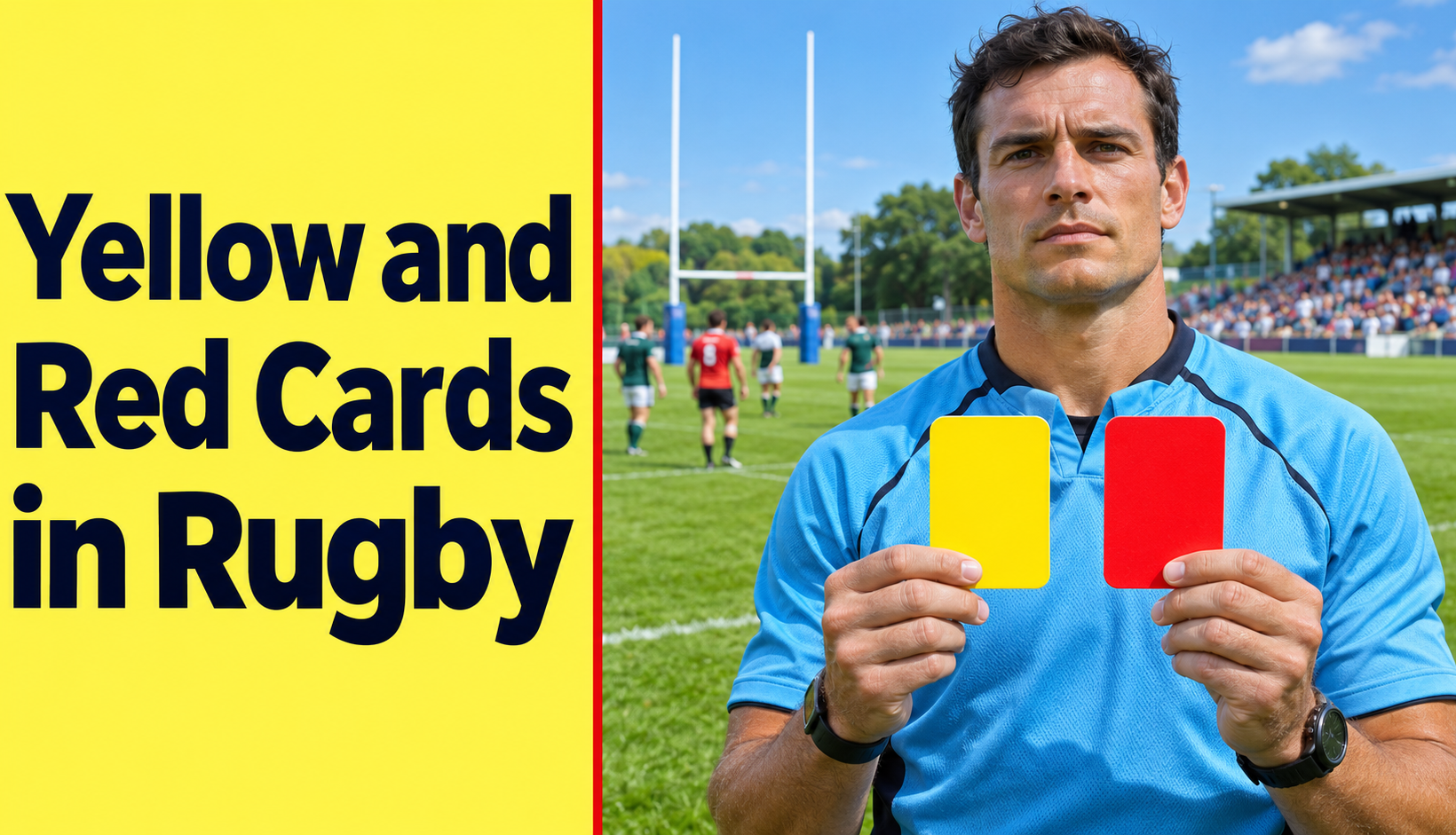
Cards are rugby’s main tool for punishing foul play and repeated rule-breaking during a match. A yellow or red card can change the result of a game in an instant, as the penalised team plays with fewer players.
In rugby union, referees show yellow cards for temporary suspensions and red cards for sending players off. In recent years, World Rugby has introduced an off-field review system and a 20-minute red card for elite rugby, changing how cards affect matches. This guide explains when yellow and red cards are given, what happens to the player and the team, the new review process, the 20-minute red card, post-match disciplinary hearings and how cards work in rugby sevens and rugby league.
Card Types at a Glance
| Card | Time Off the Field | Can the Team Replace the Player? |
|---|---|---|
| Yellow card | 10 minutes in the sin bin | No, but the player returns |
| 20-minute red card | Rest of the match | Yes, after 20 minutes |
| Permanent red card | Rest of the match | No, team plays a player short |
The Yellow Card
A yellow card is a temporary suspension. The player must leave the field and spend ten minutes of playing time in the sin bin. The team cannot replace them during that period, so it plays with fourteen players, or fewer if more players are carded. After ten minutes, the player can return to the field.
Common Reasons for a Yellow Card
- Cynical fouls: deliberately knocking the ball on or slowing the ball down to stop an attack.
- Repeated infringements: a team or player conceding penalties over and over, especially near their own try line.
- Dangerous play below the red card threshold: such as some high tackles with mitigating factors.
- Professional fouls: illegally stopping a probable try, which can also result in a penalty try.
- Offside or entering the side of a ruck in a way that prevents a clear scoring chance.
- Dissent or misconduct towards the referee in some cases.
Referees often give a team warning before showing a yellow card for repeated infringements, telling the captain that the next offense will lead to a card.
The Red Card
A red card sends a player off for the rest of the match. Red cards are used for serious foul play, such as dangerous tackles with direct head contact and no mitigation, tip tackles that drop a player onto the head or neck, punching, stamping, eye-gouging, biting and dangerous clean-outs at the ruck.
A player who receives two yellow cards in the same match is also sent off, as the second yellow becomes a red card.
The 20-Minute Red Card
World Rugby has introduced a 20-minute red card as a global law trial for elite rugby, with national unions deciding which competitions count as elite. Under this system, a player shown a 20-minute red card cannot return, but after 20 minutes of playing time their team can bring on a replacement from the bench, including a player who has already been used.
The aim is to keep punishing foul play while reducing the chance that a single, often accidental, high tackle ruins a match as a contest. Two yellow cards for the same player also result in a 20-minute red card.
When a Permanent Red Still Applies
Highly dangerous and intentional acts, such as deliberate strikes to the head, eye-gouging or reckless dangerous play, still receive a permanent red card. In those cases the team plays with one fewer player for the rest of the match. The referee decides on a permanent red card on the field, with help from the television match official.
The Off-Field Review System
To avoid long delays during matches, elite competitions use an off-field review process, often nicknamed the bunker. When the referee believes an incident is at least a yellow card but may be a red, they show a yellow card and cross their arms above their head. The player leaves the field for ten minutes while a foul play review officer or the TMO studies the footage.
The reviewer has up to eight minutes to decide whether the yellow card stands or should be upgraded to a 20-minute red card. If upgraded, the referee shows a red card with the crossed-arms signal, and the player does not return, though a replacement can come on after 20 minutes. Permanent red cards cannot be issued through this off-field review and must be given on the field.
Head Contact and Tackle Height
Many cards in modern rugby come from tackles involving contact with the head. World Rugby uses a head contact process that asks whether foul play occurred, the degree of danger and whether mitigating factors exist, such as a sudden drop in height by the ball carrier. Mitigation can reduce a red card to a yellow or a yellow to a penalty.
Many community and amateur competitions have lowered the legal tackle height, often to below the sternum, to reduce head injuries. Players are encouraged to tackle lower and use proper technique to avoid both injuries and cards.
What Happens After a Red Card
A red card usually leads to a disciplinary process after the match. An independent judicial committee reviews the incident and decides on a suspension. The process generally involves:
- Entry point: the panel decides whether the offense was at the low, mid or top end of seriousness, each with a starting suspension length.
- Aggravating factors: previous disciplinary records or a need for deterrence can increase the ban.
- Mitigating factors: an early guilty plea, remorse and a good record can reduce the ban.
- Coaching intervention: for some head contact offenses, completing a tackle technique programme can reduce the suspension by a match.
Players can also be cited after a match for foul play that the referee missed, leading to the same hearing process.
Yellow Card Accumulation
Many competitions track yellow cards across a season or tournament. A player who reaches a set number of yellow cards may face a disciplinary review or an automatic suspension. Rules vary by competition, so teams monitor players’ card counts carefully during long tournaments.
Cards and Scrums
When a front row forward is carded, the team must ensure it still has enough trained front row players to contest scrums safely. If not, scrums become uncontested, and the laws generally prevent the team from replacing the player whose departure caused the uncontested scrums, so teams cannot gain an advantage from them.
Respect for the Referee
Rugby places strong emphasis on respect for match officials. Only the captain is generally expected to speak with the referee about decisions, and arguing, swearing at or gesturing towards officials can lead to a penalty being moved ten metres closer to the offending team’s try line, or to a card for persistent dissent. Coaches and team staff can also face sanctions from disciplinary bodies for criticising referees inappropriately. This culture helps keep matches under control and protects referees at every level, from international stadiums to local clubs.
Cards in Rugby Sevens
In rugby sevens, matches are much shorter, so a yellow card means two minutes in the sin bin instead of ten. Red cards still mean a player is sent off for the rest of the match. Because each team has only seven players, losing one has an even bigger effect on the game.
Cards in Rugby League
Rugby league also uses sin bins, typically for ten minutes, and send-offs for serious foul play. Many professional leagues also place players on report, meaning an incident is reviewed after the match by a match review committee, which can issue charges and suspensions even when no card was shown. Some league competitions have introduced their own replacement rules, so procedures vary by competition.
How Cards Affect Strategy
When a team loses a player to the sin bin, it often slows the game, kicks for territory and focuses on defence. The opposition may run the ball wider to exploit the extra space. Coaches may make tactical substitutions, especially in the front row, to manage the scrum. With the 20-minute red card, teams must plan for a period with fewer players, then bring on a replacement who may change the momentum of the match.
Final Thoughts
In rugby union, a yellow card means ten minutes in the sin bin, while a red card sends a player off for the rest of the match. Elite competitions now use off-field reviews and a 20-minute red card that allows a replacement after 20 minutes, while intentional and highly dangerous acts still bring a permanent red. Post-match hearings decide suspensions, with head contact a key focus of player safety in modern rugby.
FAQs
1. How long is a yellow card in rugby?
Ten minutes in the sin bin in rugby union, or two minutes in rugby sevens.
2. Can a red-carded player be replaced in rugby?
Under the 20-minute red card trial in elite rugby, yes, after 20 minutes. A permanent red card cannot be replaced.
3. What does it mean when the referee crosses their arms with a yellow card?
The incident is being sent for an off-field review that could upgrade the yellow card to a red.

Jante Smith is a creative and dedicated content writer who loves turning ideas into clear and engaging stories. She writes blog posts and articles that connect with readers. She ensures every piece of content is well-structured and easy to understand. Her writing helps our brand share useful information and build strong relationships with our audience.