
Why Grassroots Rugby Clubs Matter in Melbourne
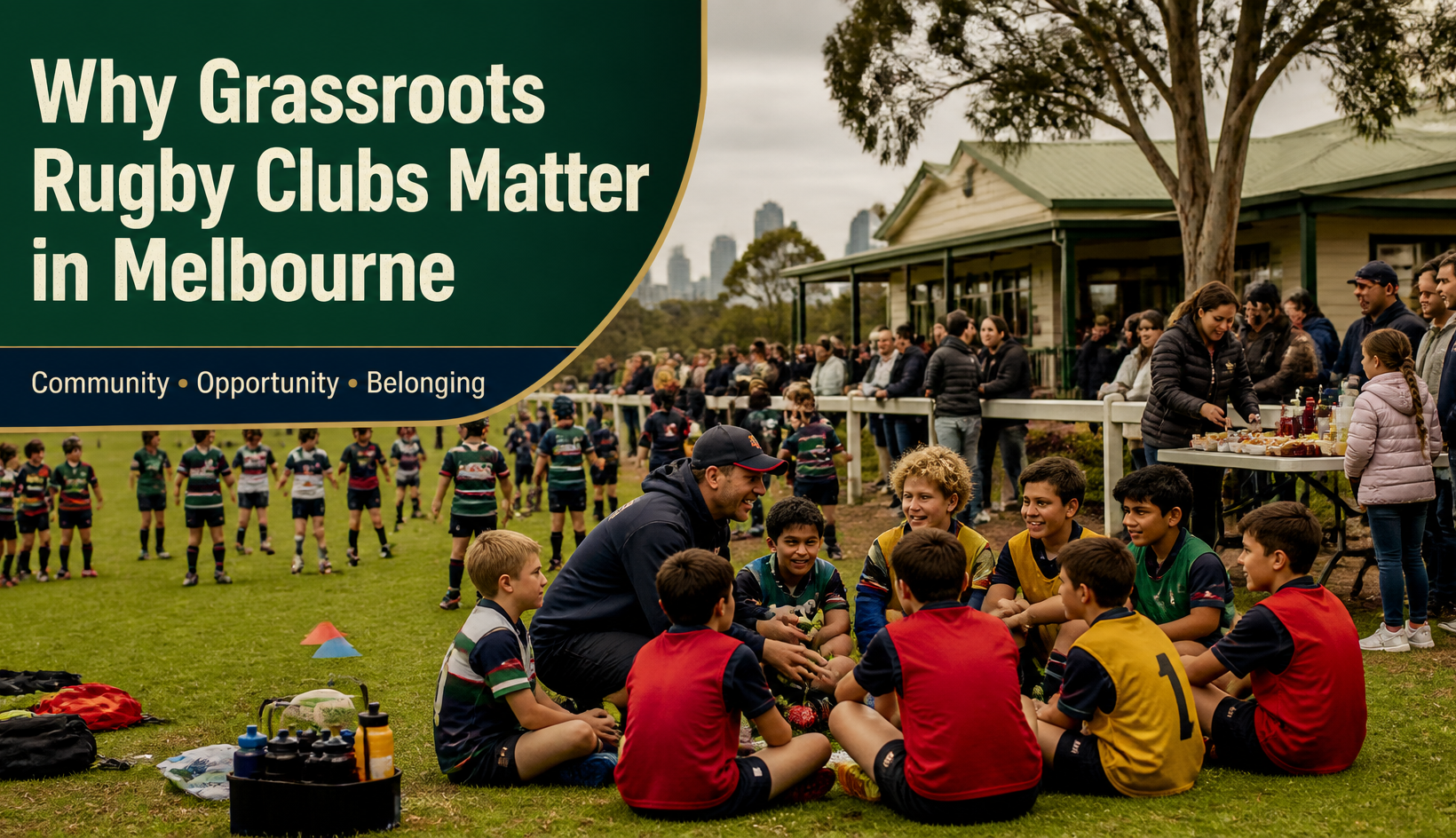
Melbourne is famous as the home of Australian rules football, but every weekend through autumn and winter, rugby union is played across the city in parks, school ovals, and suburban reserves. These matches are run by grassroots rugby clubs, community organisations that depend on volunteers, local sponsors, and the commitment of players and families.
Since the Melbourne Rebels left Super Rugby after the 2024 season, these clubs have become more important than ever. This article explains why grassroots rugby clubs matter in Melbourne, from player pathways and multicultural communities to health, belonging, and the future of the game in Victoria.
Rugby in an Australian Rules City
Rugby has been played in Melbourne since the 1800s, but it has always lived in the shadow of Australian rules. The local senior competition began in 1909, stopped during both World Wars, and was rebuilt in 1926 by a small group of clubs. Since then, the sport has survived largely because of the dedication of community clubs.
Unlike in Sydney or Brisbane, rugby in Melbourne rarely gets much media attention or school-based support. That means clubs often do the heavy lifting themselves: finding players, coaching juniors, securing grounds, and keeping the game visible.
Life After the Melbourne Rebels
For 14 seasons, from 2011 to 2024, the Melbourne Rebels gave Victoria a professional Super Rugby team. In May 2024, Rugby Australia confirmed the Rebels would not continue in Super Rugby Pacific from 2025. The club had entered voluntary administration in January 2024 with debts reported at close to $23 million.
The loss had several effects on local rugby:
- No professional team for young Victorians to watch and aspire to locally
- Weaker pathway links between club rugby and the professional game
- Fewer high-profile matches to attract new fans and players
- Concern about player drift to other codes, including rugby league
The Rebels era showed what Victorian talent could achieve. Players such as Rob Valetini, Pete Samu, and Rob Leota started together in the Wallabies back row against the All Blacks in Melbourne in 2022. Without a local professional team, it now falls largely on community clubs to find and develop the next generation.
The Clubs Keeping the Game Alive
Victoria’s senior club scene remains active. In 2026, ten clubs took part in the top senior men’s competition, which feeds into the Dewar Shield and Ward Shield.
| 2026 Senior Competition | Clubs or Teams | Notes |
|---|---|---|
| Dewar and Ward Shields | 10 clubs | Combined first phase, then split into two divisions of five |
| Lindroth Cup | 6 teams | 15-round season |
| Conference Cup | 10 teams | Metro and country conferences |
| 3rd Grade | 6 clubs | New premier third-grade competition |
Rugby Victoria described 2026 as a transitional season after a review of the 2025 competitions, with a goal of tighter contests and a better experience for players. A divisional structure with promotion and relegation is targeted for 2028.
Clubs such as Melbourne University, Moorabbin, Power House, Box Hill, Footscray, Harlequins, Melbourne Unicorns, Endeavour Hills, Kiwi Hawthorn, and newcomer Brimbank carry the weight of senior rugby in the city, alongside metro and regional clubs in other competitions.
Developing Players From the Ground Up
Every professional player starts somewhere, and in Melbourne that place is usually a local club. Grassroots clubs provide:
- Junior programs that introduce children to rugby in a safe, fun way
- Colts and youth teams that help teenagers move into senior rugby
- Coaching from volunteers, many of them former players
- Representative opportunities through state and regional selection
Melbourne clubs have a proud history of producing international players. Clubs such as the Kiwis produced Wallabies in the 1970s, long before Victoria had a professional team. That history shows that strong community rugby can produce top talent even without a professional franchise nearby.
A Home for Multicultural Communities
Melbourne is one of the most culturally diverse cities in the world, and rugby clubs reflect that. Many clubs have strong links with communities from New Zealand, the Pacific Islands, South Africa, the United Kingdom, Ireland, and beyond.
For migrants and expats, a rugby club can offer:
- A familiar sport and culture in a new country
- Friendships and social networks
- Connections that can help with work and housing
- A place for families to celebrate their heritage
Pasifika communities, in particular, have become a major part of rugby in Victoria, especially in Melbourne’s growing outer suburbs. Clubs in these areas often serve as community hubs as much as sporting organisations.
Health, Wellbeing, and Belonging
The value of grassroots clubs goes far beyond the scoreboard. Community sport is widely recognised for its benefits to physical and mental health.
- Fitness: regular training keeps players active through the cold months
- Mental health: team environments reduce isolation and build support networks
- Life skills: discipline, teamwork, and resilience carry into work and study
- Belonging: clubs give people a place where they are known and valued
For young men in particular, rugby clubs can provide positive role models and a sense of purpose, especially during difficult life stages.
Growing Women’s and Girls’ Rugby
Women’s and girls’ rugby has been one of the most exciting areas of growth in the sport. Grassroots clubs are central to this, as they provide the teams, coaches, and facilities that allow women and girls to play.
Local councils are also helping. New and renewed pavilions across Melbourne increasingly include change rooms designed for all players, replacing older facilities that were built mainly for men’s teams. Better facilities make it easier for clubs to welcome new female players.
Value to Local Neighbourhoods
Grassroots clubs also give back to the suburbs where they play. Match days bring people to local parks, cafes, and businesses, while club rooms are often used for community events, fundraisers, and celebrations. Many clubs work with local schools, councils, and charities, helping to keep public reserves active and well used.
Local businesses that sponsor clubs gain visibility with loyal supporters, and in return the club can keep fees lower for families. This simple partnership model helps rugby stay accessible to people from all backgrounds, not only those who can afford expensive sport.
The Challenges Grassroots Clubs Face
Despite their importance, community clubs in Melbourne face real pressures:
- Competition for players and volunteers from other sports
- Rising costs for insurance, referees, and equipment
- Limited access to grounds shared with other codes
- Reliance on a small number of volunteers
- Less visibility since the loss of the Rebels
These challenges make support from members, families, sponsors, and local government even more important.
How You Can Support Local Rugby
- Register as a player, at any age or level
- Volunteer as a coach, manager, or match-day helper
- Attend local matches and bring friends
- Become a social member or sponsor
- Share club news on social media
Final Thoughts
Grassroots rugby clubs matter in Melbourne because they keep the game alive in a city where it must fight for attention. With the Rebels gone from Super Rugby, community clubs now carry the job of developing players, welcoming migrants, building healthy communities, and growing women’s rugby. Supporting a local club is one of the best ways to make sure rugby has a strong future in Victoria.

Jante Smith is a creative and dedicated content writer who loves turning ideas into clear and engaging stories. She writes blog posts and articles that connect with readers. She ensures every piece of content is well-structured and easy to understand. Her writing helps our brand share useful information and build strong relationships with our audience.