
How New Zealand Expats Started Kiwi Rugby
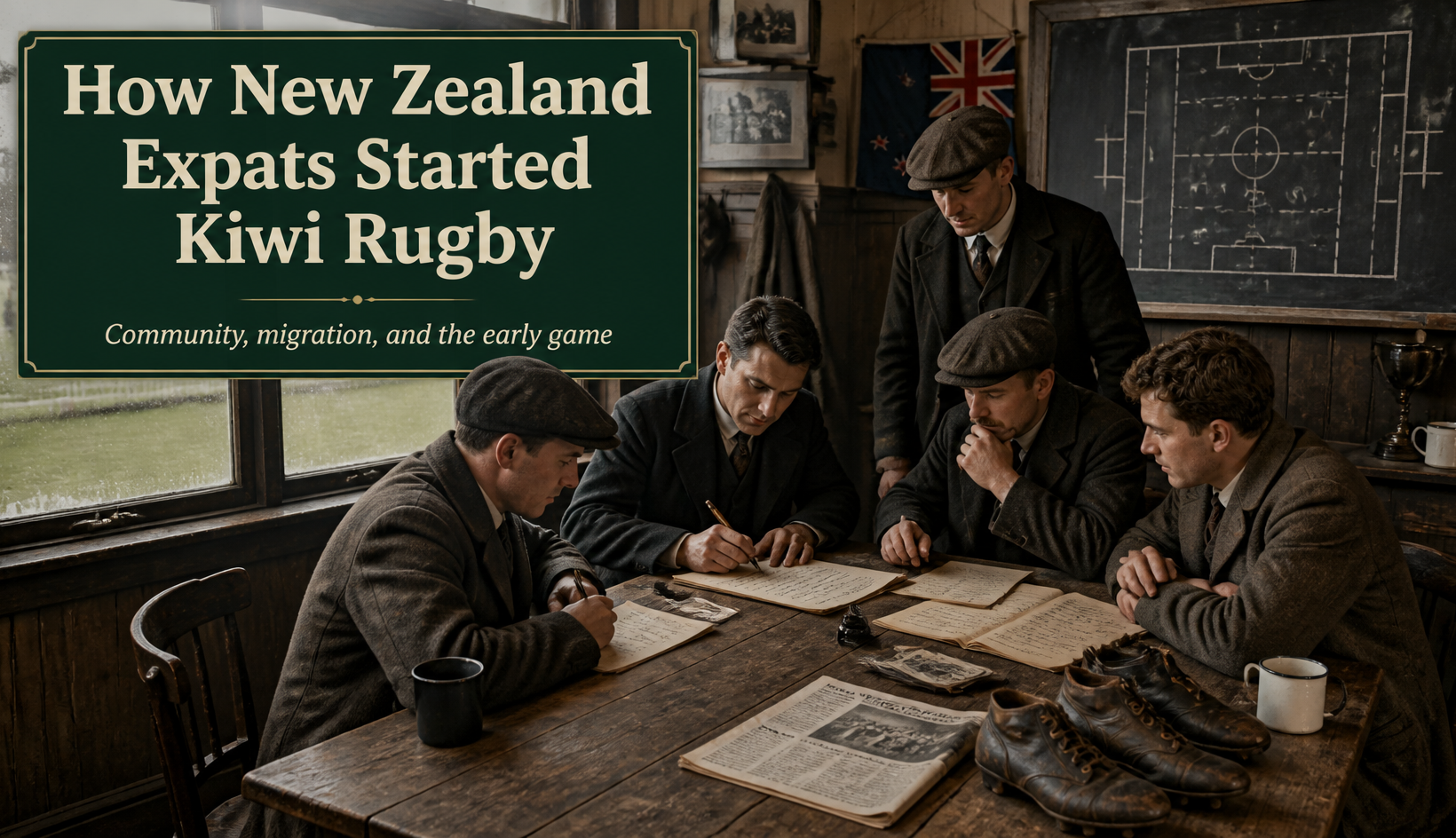
Every rugby club has a founding story, but few are as closely tied to migration as the Kiwi club of Melbourne. In the years after the First World War, a group of New Zealanders living in Victoria decided they wanted to play the game they had grown up with. What they started in 1923 went on to help rebuild rugby union in Victoria and became the foundation of today’s Kiwi Hawthorn Rugby Club.
This article looks at how those New Zealand expats started Kiwi rugby, the world they were playing in, and why their club mattered so much to the survival of the game in Melbourne.
New Zealanders in Melbourne Before the Kiwis
New Zealand influence on Melbourne rugby goes back much further than 1923. When the Melbourne Rugby Football Club formed in 1888, many of its members were former rugby players, and several of them came from New Zealand.
In 1889, that club split, creating a side known as Pakeha, a club made up of New Zealanders. It played Melbourne in 1890, but the local game soon collapsed for a few years. Even so, the Pakeha club showed something that would happen again three decades later: New Zealanders far from home often turned to rugby to stay connected to their roots.
A Game Struggling to Survive
To understand why the Kiwis were important, it helps to know how fragile rugby was in Victoria at the time. Melbourne was, and still is, the heartland of Australian rules football. Rugby union was a minority sport with only a handful of clubs.
| Year | Key Event in Victorian Rugby |
|---|---|
| 1909 | Melbourne club competition begins and the Dewar Shield is first awarded |
| 1914 | Club competition stops as players leave for the First World War |
| 1921 | A Victorian side loses heavily to the touring South Africans |
| 1923 | The Kiwi club is formed; the Victorian Rugby League is also established |
| 1926 | Six clubs, including the Kiwis, form the new Victorian Rugby Union |
When club rugby stopped in 1914, it did not properly restart for more than a decade. Many players had gone to war, some did not return, and the competition simply faded. By the early 1920s, there was little organised rugby union left in Melbourne.
The Founding of the Kiwi Club in 1923
It was in this environment that the Kiwi club was formed in 1923. Club and Rugby Victoria histories describe its founders as expatriate New Zealanders, including servicemen who had settled in Melbourne after the war.
For these men, the club offered more than a game. It gave them:
- A link to home and the rugby culture they had grown up with
- A social network in a new city
- Friendship with others who shared the same accent, humour, and background
- A sense of identity at a time when many were rebuilding their lives after the war
The name said it all. Calling the club the Kiwis made its New Zealand roots impossible to miss, and that identity has stayed with the club for more than a hundred years.
Playing Wherever They Could
The early 1920s were a confusing time for rugby codes in Melbourne. The Victorian Rugby League was formed in 1923, the same year as the Kiwi club. Victorian rugby histories note that the clubs which later created the modern Victorian Rugby Union came from that league competition. In other words, the Kiwis and their fellow clubs appear to have spent their first seasons playing in the league setup before switching to union.
The 1926 Switch to Rugby Union
In 1926, six clubs decided to break away and form a new Victorian Rugby Union. The Kiwis were one of them. The six founding clubs were:
- Kiwis
- Melbourne
- Melbourne University
- St Kilda
- RAAF
- Navy
Several reasons pushed the clubs toward union. The New Zealand Rugby Union offered to include Melbourne on a future All Blacks tour, which was a huge attraction. The New Zealand and New South Wales unions also offered administrative and financial support. Union’s amateur status appealed to some players as well.
New Zealand’s role here is striking. A New Zealand Rugby Union committee member, Tom Fletcher, is credited with helping organise the new competition. For a club founded by New Zealanders, it was fitting that support from their home country helped bring rugby union back to Melbourne.
Quick Success in the New Competition
Once the new union competition was running, the Kiwis wasted little time. They won the Dewar Shield in 1927, 1928, and 1929, followed by another title in 1931. Within five years of the competition’s restart, the club had collected four premierships.
That early dominance was likely helped by the experience its New Zealand players brought with them. Many had grown up in a country where rugby was the national game, giving them skills and game knowledge that were still developing in Melbourne.
A Growing Competition
The Kiwis’ success came as the wider competition expanded. New clubs joined over the following years, including Harlequin and Footscray in 1928, Geelong in 1929, and Power House in 1933. By 1937, Victoria had 13 clubs and 30 senior teams across four grades, a remarkable recovery from the empty years after the First World War.
The Kiwis remained a leading force, winning another premiership in 1939. Rugby Victoria’s history also mentions a disputed final involving the Kiwis and Power House around this time, one of the last premierships decided before the Second World War halted club rugby again.
Why the New Zealand Connection Mattered
The story of the Kiwi club shows how migrant communities can shape sport in a new country. Without groups like these New Zealanders, rugby union in Victoria might have taken much longer to recover. Their contribution included:
- Players: experienced footballers who raised the standard of local rugby
- Culture: a strong team spirit and a love of the game
- Connections: links with New Zealand rugby that brought support and touring opportunities
- Continuity: a club that has lasted through wars, mergers, and changing times
From the Kiwis to Kiwi Hawthorn
The club founded by those expats did not stay frozen in time. After the Second World War, it continued to compete and enjoyed a celebrated run of success in the 1970s. In 1987, it merged with Hawthorn Rugby Club to become Kiwi Hawthorn, and today it plays at Lewin Reserve in Glen Iris.
The New Zealand identity remains central. The club still carries the Kiwi name, and it continues to attract players and supporters with links across the Tasman alongside local Melbourne players. In 2023, the club celebrated its centenary, marking 100 years since that group of New Zealanders first came together.
Lessons From the Founding Story
The founding of the Kiwi club offers a few lasting lessons for anyone involved in community sport:
- Small groups of committed people can build institutions that last generations
- Shared identity, such as a common homeland, can be a powerful foundation for a club
- Outside support, like the help given by New Zealand rugby, can be vital in difficult times
- Clubs that adapt, through mergers and new grounds, are more likely to survive
Final Thoughts
How New Zealand expats started Kiwi rugby is a story of homesick players, a struggling sport, and a club that helped bring rugby union back to life in Melbourne. Formed in 1923 and one of the six founding clubs of the Victorian Rugby Union in 1926, the Kiwis quickly became champions and built an identity that still defines Kiwi Hawthorn more than a century later.

Jante Smith is a creative and dedicated content writer who loves turning ideas into clear and engaging stories. She writes blog posts and articles that connect with readers. She ensures every piece of content is well-structured and easy to understand. Her writing helps our brand share useful information and build strong relationships with our audience.