
Best Rugby Mouthguards and Protective Gear
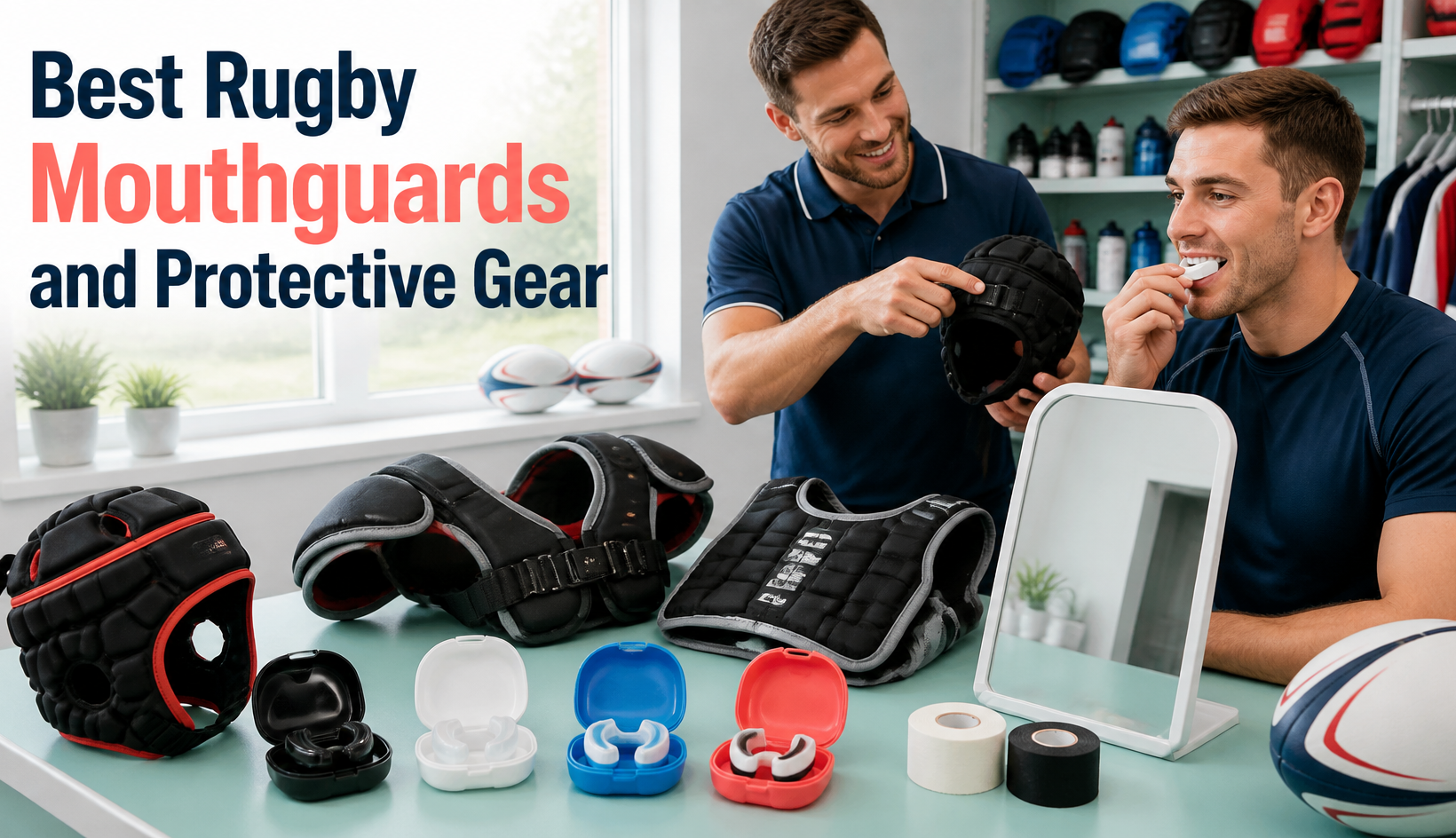
Rugby is a full-contact sport, and the right protective gear can help reduce the risk of some injuries, especially to the mouth, teeth, ears, and skin. Unlike sports such as American football, rugby allows only limited padding, and all protective equipment must meet strict safety standards. Knowing what to buy, and what is allowed, helps players stay safe and play with confidence.
This guide covers the best rugby mouthguards and protective gear for amateur players, including types of mouthguards, headgear, shoulder pads, and other accessories, plus tips on fit, care, and the rules.
Why Protective Gear Matters
Protective gear in rugby is designed to:
- Protect teeth and the mouth from impact
- Reduce cuts, abrasions, and ear injuries
- Cushion bumps and bruises in contact areas
- Support joints that have been injured before
However, no gear can make rugby completely safe. Good technique, fitness, and following the laws remain the most important ways to reduce injury risk.
Mouthguards: The Most Important Piece of Gear
A mouthguard is the single most important piece of protective equipment for most rugby players. Many clubs and junior competitions strongly encourage or require them, and dental organisations widely recommend mouthguards for contact sport.
Types of Mouthguards
| Type | How It Works | Pros | Cons |
|---|---|---|---|
| Custom-fitted | Made from a mould of your teeth, often through a dentist | Best fit, comfort, and protection | Most expensive |
| Boil-and-bite | Softened in hot water, then shaped by biting | Affordable, widely available | Fit depends on moulding |
| Stock or ready-made | Pre-formed, used straight from the pack | Cheapest option | Poor fit, less protection |
A custom-fitted mouthguard is generally considered the best choice for regular players because it fits closely, stays in place, and allows easier breathing and talking. For beginners or juniors still growing, a good-quality boil-and-bite option can be a sensible starting point.
Popular Mouthguard Brands
Well-known sports mouthguard brands used by rugby players include OPRO, SISU, Shock Doctor, and rugby brands such as Gilbert. Many offer self-fit versions in different sizes and thicknesses. Choose one marketed for contact sports and check the sizing guide carefully.
Smart Mouthguards
At the elite level, World Rugby has introduced instrumented or “smart” mouthguards that measure head impacts. They help medical staff identify significant head acceleration events during matches. These are mainly used in professional rugby rather than community games, but they show how seriously the sport takes player welfare.
Mouthguard Tips
- Replace mouthguards that are damaged, worn, or no longer fit
- Rinse after use and store in a ventilated case
- Avoid leaving them in hot cars, which can warp the shape
- Children may need a new mouthguard each season as teeth change
- Players with braces should ask their orthodontist about suitable options
Headgear and Scrum Caps
Soft headgear, often called a scrum cap, is popular with forwards. It can help protect against:
- Cuts and grazes to the head
- Ear injuries, including “cauliflower ear”
- Rubbing in scrums and rucks
It is important to understand that headgear is not designed to prevent concussion. Players should never take more risks because they are wearing it.
Headgear used in rugby must meet World Rugby’s equipment standards. Look for products that carry the official World Rugby approval label.
Shoulder Pads and Body Protection
Rugby allows only thin, soft padding. Approved shoulder pads, usually built into a fitted vest or top, can help reduce bruising and minor impact injuries to the shoulders, collarbones, and upper chest.
Key points:
- Padding must meet World Rugby’s limits on thickness and density
- Rigid or hard padding is not permitted
- Look for the World Rugby approval label on the garment
Some players prefer body protection for confidence, while others find it restrictive. Try it at training before wearing it in a match.
Other Protective Accessories
| Item | Purpose |
|---|---|
| Shin guards | Protect against stud and boot impacts, worn under socks |
| Strapping tape | Supports wrists, fingers, and ankles |
| Ankle braces | Extra support for players with previous sprains, if permitted |
| Compression wear | Comfort and warmth under the playing kit |
| Fingerless mitts | Grip and warmth, within equipment rules |
Rules on braces and supports can vary, so check with the referee or your club before using anything unusual.
What Is Not Allowed
To protect all players, rugby bans equipment that could cause injury to others, including:
- Hard or rigid padding
- Jewellery, such as rings, earrings, and necklaces
- Studs with sharp or damaged edges
- Gear without the appropriate World Rugby approval where required
Referees may inspect equipment before a match and ask players to remove anything unsafe.
Choosing Gear by Position
- Front row and locks: mouthguard, scrum cap for ear protection, strapping
- Back row: mouthguard, optional shoulder padding, strapping
- Halves and backs: mouthguard, lightweight shin guards, optional headgear
Every player, whatever their position, should wear a mouthguard. It is also worth carrying a spare in your kit bag, as mouthguards are easily lost or forgotten on match day.
Gear for Junior Players
Parents often ask what children really need when they start rugby. For most juniors, the essentials are simple:
- A well-fitting mouthguard, replaced as teeth and jaws grow
- Comfortable boots with studs that meet the rules
- A water bottle and warm layers for cold mornings
Headgear and padded tops are optional. Some children feel more confident wearing them, which is fine, but coaches should continue to teach safe technique rather than relying on equipment. Age-appropriate formats, such as Get Into Rugby and modified junior games, also reduce the intensity of contact for younger players.
When to Replace or Upgrade Gear
Protective gear does not last forever. Consider replacing or upgrading when:
- Your mouthguard feels loose, cracked, or uncomfortable
- Headgear padding becomes thin, torn, or compressed
- Shoulder pads no longer sit correctly over the shoulders
- You move to a more physical position, such as the front row
- You start playing more often or at a higher level
A quick check at the start of each pre-season is a good habit, and it is far cheaper than dealing with an avoidable injury later.
Budget Tips
- Prioritise a good mouthguard before anything else
- Buy headgear and pads from reputable rugby retailers
- Look for end-of-season sales
- Ask your club about gear swaps for juniors, but always use a new mouthguard
Caring for Protective Gear
- Wash headgear and padded tops regularly to prevent odour and bacteria
- Dry gear naturally away from direct heat
- Check for tears, thinning padding, or damage each season
- Replace items that no longer fit or meet safety standards
Final Thoughts
The best rugby mouthguards and protective gear start with a well-fitting mouthguard, ideally custom-fitted, supported by approved headgear, light shoulder padding, shin guards, and strapping where needed. Always choose gear that meets World Rugby’s standards, remember that headgear does not prevent concussion, and combine your equipment with good technique and fitness to play rugby as safely as possible.

Jante Smith is a creative and dedicated content writer who loves turning ideas into clear and engaging stories. She writes blog posts and articles that connect with readers. She ensures every piece of content is well-structured and easy to understand. Her writing helps our brand share useful information and build strong relationships with our audience.