
Concussion Rules in Community Rugby
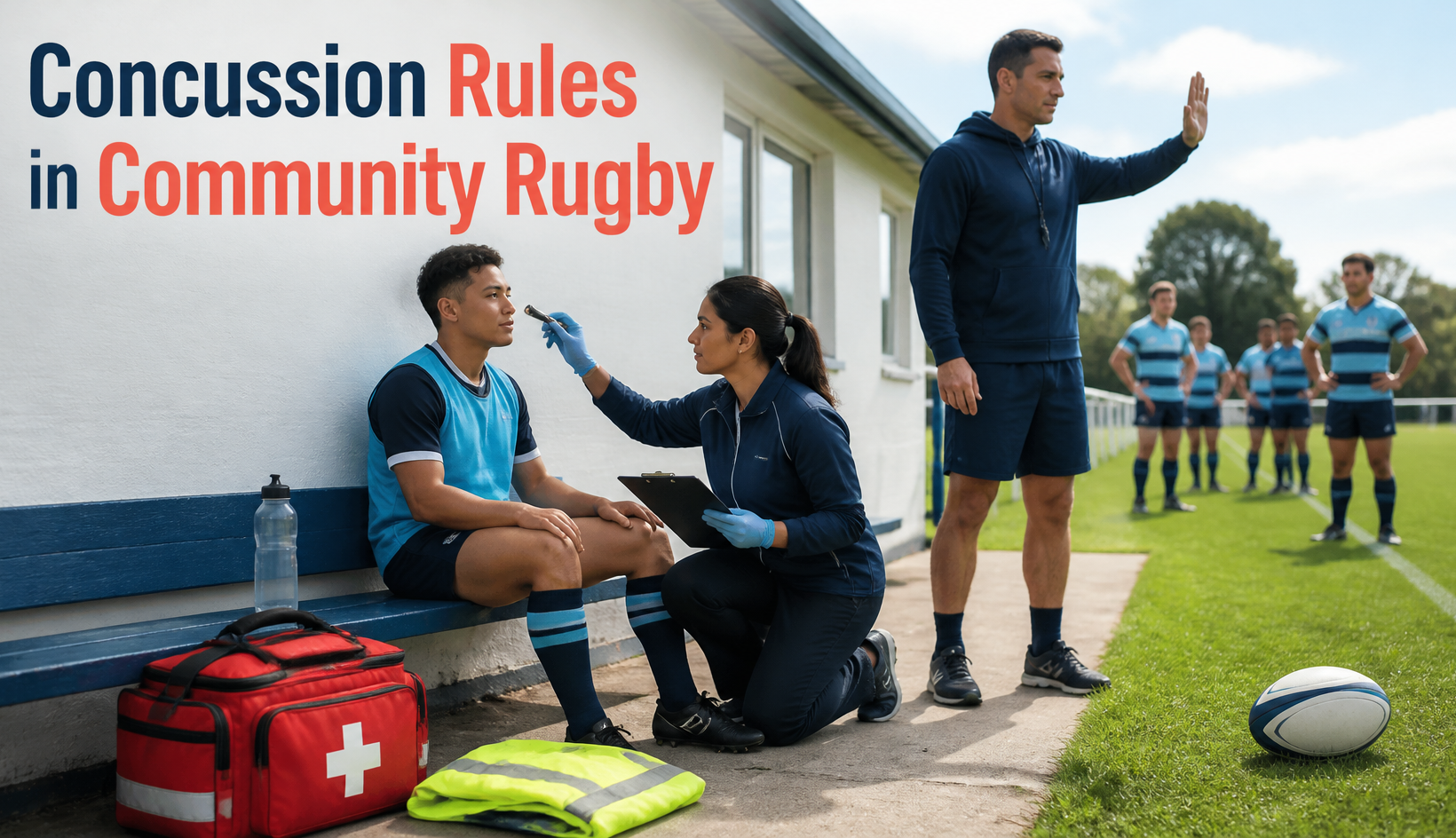
Concussion is one of the most important safety issues in rugby. At the elite level, players are supported by team doctors and video review. In community rugby, the responsibility falls on referees, coaches, volunteers, parents, and players themselves. That is why clear concussion rules matter so much at club level.
This guide explains the concussion rules in community rugby in Australia, including how suspected concussions are identified, the Blue Card system, the steps players must follow, minimum stand-down periods, medical clearance, and what clubs and parents need to know.
What Is Concussion?
Concussion is a brain injury caused by a direct blow to the head or a force transmitted to the head from elsewhere in the body. It can happen in tackles, rucks, falls, or accidental clashes. A player does not need to be knocked out to be concussed, and symptoms can appear straight away or develop hours later.
Common Signs and Symptoms
- Headache or a feeling of pressure in the head
- Dizziness, nausea, or vomiting
- Confusion, memory problems, or slowed thinking
- Balance problems or unsteadiness
- Blurred vision or sensitivity to light and noise
- Unusual emotions or behaviour
- Lying still, slow to get up, or clutching the head after contact
The Golden Rule: If in Doubt, Sit Them Out
The core principle across Australian community sport is simple: any player with a suspected concussion must be removed from play immediately and must not return to the field that day. Rugby Australia’s policy is clear that no one, including coaches, trainers, physiotherapists, or doctors, can override a player’s need to stay off the field once a concussion is suspected.
The Blue Card System
In community rugby matches for Under 13s and older, referees use a Blue Card. When a player leaves the field showing signs or symptoms of concussion, the referee shows a Blue Card. This is not a punishment; it signals that the player has been removed for a suspected head injury and starts the off-field management process.
Rugby Australia’s Eight-Step Process
Rugby Australia sets out concussion management in two stages:
| Stage | Step | What It Means |
|---|---|---|
| On the day | Recognise | Identify signs and symptoms |
| On the day | Remove | Take the player out of play immediately |
| On the day | Record | Document the incident |
| On the day | Refer | Send the player to a trained healthcare practitioner |
| Following days | Rest | Relative rest in the early period |
| Following days | Recover | Allow symptoms to resolve |
| Following days | Record | Track progress and clearance |
| Following days | Return | Complete a graduated return to play |
Initial assessment should be carried out by an appropriately trained healthcare practitioner, such as a doctor, physiotherapist, or nurse.
Minimum Stand-Down Periods
A player diagnosed with concussion cannot return to full-contact rugby straight away. Rugby Australia’s Concussion Management Procedure sets minimum stand-down periods:
| Age Group | Minimum Stand-Down |
|---|---|
| 18 and under | At least 21 days |
| 19 and over | At least 12 days, under Rugby Australia’s procedure |
These are minimums only. Many players will need longer, depending on how their symptoms resolve and what their doctor advises.
The National Community Sport Guidelines
In 2024, the Australian Institute of Sport released the Australian Concussion Guidelines for Youth and Community Sport, designed to provide one consistent approach across all community sports. Key recommendations include:
- Light exercise can usually resume 24 to 48 hours after a concussion
- Players should be symptom-free for 14 days before returning to contact training
- A minimum of 21 days is recommended before returning to competitive contact sport
- Returning to school or work should take priority over returning to sport
- Schools and community clubs should appoint a concussion officer to coordinate follow-up
The national guidelines were described as aligning with approaches in the United Kingdom and New Zealand. Clubs and players should follow the most current guidance from Rugby Australia, their member union, and their doctor.
Graduated Return to Play
After a concussion, players must complete a stepwise Graduated Return to Play. Each stage gradually increases physical demand, for example:
- Rest and symptom-limited daily activity
- Light aerobic exercise such as walking or cycling
- Rugby-specific exercise without contact, such as running drills
- Non-contact training with more complex drills
- Full-contact training after appropriate clearance
- Return to matches once minimum periods and clearance are complete
If symptoms return at any stage, the player should step back and seek medical advice.
Medical Clearance Is Required
Under Rugby Australia’s policy, players must complete the Referral and Return form, and final clearance must come from a medical doctor. Players who do not complete the process are excluded from full-contact training and match play until they do.
Rugby Australia also uses Rugby Xplorer to manage concussion cases, helping to stop players from participating until final clearance is recorded.
Roles and Responsibilities
Players
- Report symptoms honestly, even if it means missing a big game
- Look out for teammates who seem unwell after a knock
- Follow the full return-to-play process
Coaches and Team Managers
- Remove any player with a suspected concussion
- Record incidents and inform parents of junior players
- Never pressure players to return early
Parents
- Watch for symptoms after games, including later that day and overnight
- Arrange medical assessment and follow the doctor’s advice
- Support children in returning to school before sport
Clubs
- Educate players, coaches, and parents about concussion
- Appoint a concussion officer, as recommended by national guidelines
- Keep records and make sure clearance processes are followed
Common Concussion Myths
- “You have to be knocked out to be concussed.” Most concussions happen without loss of consciousness.
- “Headgear prevents concussion.” Soft headgear may help with cuts and ear injuries, but it should not be relied on to prevent concussion.
- “If they feel fine after a few minutes, they can go back on.” Symptoms can be delayed, which is why players must not return on the same day.
- “Only a big hit causes concussion.” Even a seemingly minor knock or whiplash-type movement can cause one.
Understanding these myths helps everyone at a club make safer decisions.
When to Seek Urgent Help
Call emergency services or go to hospital immediately if a player has:
- Loss of consciousness or seizures
- Severe or worsening headache
- Repeated vomiting
- Neck pain, weakness, or tingling in the limbs
- Increasing confusion, drowsiness, or unusual behaviour
Why These Rules Matter
Young brains in particular need time to recover, and returning too soon can increase the risk of further injury. Clear rules protect players, give coaches confidence, and help keep rugby safe and welcoming for families.
Final Thoughts
Concussion rules in community rugby focus on recognising and removing players immediately, using the Blue Card in matches for Under 13s and older, following a graduated return to play, observing minimum stand-down periods, and getting final medical clearance from a doctor. When in doubt, sit them out, and always follow current guidance from Rugby Australia and your medical professional.

Jante Smith is a creative and dedicated content writer who loves turning ideas into clear and engaging stories. She writes blog posts and articles that connect with readers. She ensures every piece of content is well-structured and easy to understand. Her writing helps our brand share useful information and build strong relationships with our audience.