
Prunes vs Dates vs Raisins: Which Dried Fruit Wins?
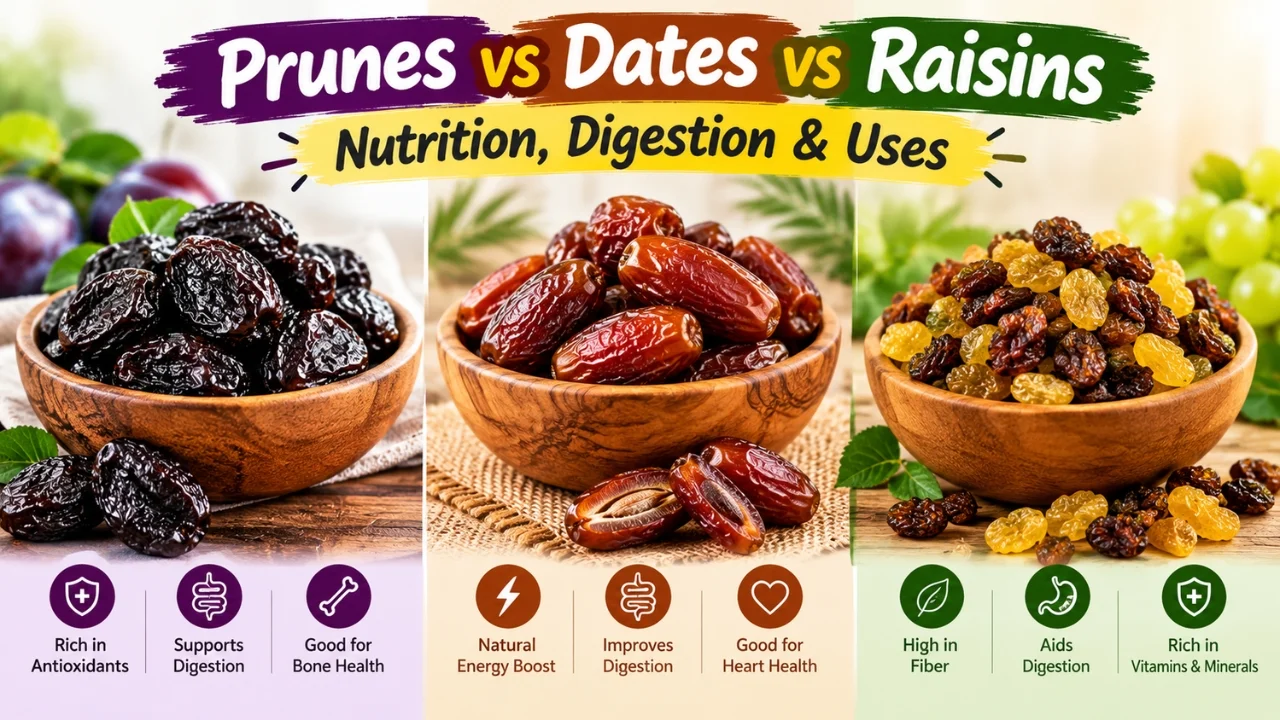
Many people eat dried fruit regularly without giving much thought to its nutritional differences. Raisins are mixed into oatmeal, dates are enjoyed alongside a cup of tea, and prunes are often kept in the kitchen for digestive support. However, the comparison of prunes vs. dates vs. raisins deserves closer attention because these three dried fruits affect digestion, blood sugar and nutrient intake in different ways. This guide explores their benefits, potential drawbacks and practical uses to help you decide which one best suits your daily diet.
Prunes vs. Dates vs. Raisins: The Nutrition Snapshot
All three are concentrated sources of fruit nutrients, meaning they generally contain more calories and natural sugars per gram than fresh fruit. However, their fiber content and individual vitamins and minerals vary considerably. Per 100 grams, prunes provide approximately 240 calories, 7 grams of fiber and 38 grams of sugar. Raisins contain around 299 calories, 3.7 grams of fiber and 59 grams of sugar. Medjool dates typically provide about 277 calories, 6–7 grams of fiber and more than 60 grams of sugar.
| Nutrient (approx. per 100 g) | Prunes | Dates (Medjool) | Raisins |
|---|---|---|---|
| Calories | ~240 kcal | ~277 kcal | ~299 kcal |
| Fiber | ~7.1 g | ~6.7 g | ~3.7 g |
| Total sugar | ~38 g | ~66 g | ~59 g |
| Potassium | ~732 mg | ~696 mg | ~749 mg |
| Iron | ~0.9 mg | ~0.9 mg | ~1.9 mg |
| Vitamin K | ~60 µg | ~3 µg | ~3.5 µg |
| Glycemic index | ~29 (low) | ~40–55 (low to moderate) | ~64 (moderate) |
Prunes stand out for their fiber content, vitamin K and generally low glycemic index. Raisins provide more iron than the other two options, although they also contain considerable natural sugar. Dates occupy a middle position in several nutritional categories and are especially popular because of their soft texture and rich, caramel-like sweetness, making them useful in both snacks and recipes.
Digestion: Which Dried Fruit Is Best for Your Gut?
For people looking to improve bowel regularity, prunes are often the most useful choice. They provide dietary fiber and sorbitol, a naturally occurring sugar alcohol that helps draw water into the intestines and soften stools. Research examining constipation relief has frequently used servings of approximately 50 grams of prunes daily, equivalent to around five or six prunes, although the ideal amount varies between individuals. Many people find that prunes help support more regular bowel movements than fiber alone.
Dates can also contribute to digestive health because their fiber supports normal bowel function. However, their effects on constipation may be less pronounced than those of prunes. They can still be a useful addition to a balanced diet, particularly when eaten alongside other fiber-rich foods such as whole grains, vegetables and legumes.
Raisins require a little more consideration for people with sensitive digestive systems. Although they contain fiber, their concentrated natural sugars may trigger gas, bloating or loose stools in some individuals, particularly those who have difficulty absorbing fructose. Small portions are generally easier to tolerate than large quantities eaten at once. Eating a substantial handful on an empty stomach may cause discomfort for some people.
Regardless of which dried fruit you choose, gradually increasing your intake and drinking enough water can help your digestive system adjust. Consuming large amounts of fiber without adequate fluids may worsen discomfort or contribute to constipation rather than relieve it.
Blood Sugar, Energy and Minerals
Since all three dried fruits contain concentrated natural sugars, controlling portion size is important regardless of which variety you prefer. A serving of approximately 30 grams is a practical starting point for many people. Depending on the fruit’s size, this may represent roughly two or three dates, three or four prunes, or around two tablespoons of raisins.
Prunes generally have a lower glycemic index, often reported at approximately 29, suggesting a relatively modest effect on blood glucose compared with higher-GI foods. Raisins have a more moderate glycemic index, sometimes reported around 64, while dates vary depending on the variety, ripeness and processing. Their glycemic response also depends on the quantity consumed and the other foods eaten alongside them.
Combining dried fruit with protein, fiber or healthy fats can help make a snack more balanced. For example, eating dates with nuts or having raisins with plain yogurt may slow digestion compared with eating the fruit alone. Nevertheless, these combinations do not eliminate the carbohydrates in dried fruit. People managing diabetes should discuss appropriate portions with their healthcare professional or registered dietitian rather than assuming that naturally occurring sugar has no effect on blood glucose.
Each dried fruit also offers a different nutritional advantage:
- Prunes: Provide vitamin K, which supports normal blood clotting and bone health, alongside fiber, potassium and several B vitamins, including niacin and pantothenic acid.
- Dates: Supply readily available carbohydrate for energy, along with potassium and magnesium. Their sweetness and convenient texture make them suitable for a snack before physical activity.
- Raisins: Contain the highest amount of iron among these three options, along with potassium and smaller amounts of phosphorus. Their compact size also makes them convenient for packed lunches and cooking.
Everyday Uses: Matching the Fruit to the Moment
The best dried fruit for you often depends on how you intend to use it. Although their nutrients overlap, their textures, sweetness and moisture levels make them suitable for different meals and occasions.
- Prunes: Their soft texture and deep flavor make them ideal for overnight oats, breakfast bowls, baked goods and slow-cooked meat dishes. They can also add moisture to cakes and muffins. Some people include a few prunes after a meal as part of their regular digestive routine.
- Dates: Their naturally sweet flavor makes them useful as a sweetening ingredient in smoothies, energy balls and homemade desserts. Removing the pits and filling dates with nut butter creates a convenient snack before exercise. They can also be blended into a paste for recipes that call for a natural sweetener.
- Raisins: Their small size and concentrated sweetness work well in rice dishes, salads, trail mix, porridge and baked products. They can add contrast to savory recipes while providing sweetness without requiring additional table sugar.
A few practical precautions are worth remembering when eating dried fruit regularly. Its sticky texture can leave sugars on the teeth, so maintaining good oral hygiene and rinsing your mouth with water after eating can be helpful. Check ingredient labels for added sugars and sulfites, especially if you have a known sensitivity. Also, keep raisins and grapes away from dogs, as both can cause serious kidney problems in dogs, even when the amount eaten appears small.
So, Which One Should You Choose?
There is no universal winner because each dried fruit serves a different nutritional purpose. Prunes are generally the strongest option for supporting bowel regularity and providing fiber with a comparatively low glycemic index. Dates are useful when you want a naturally sweet ingredient or a convenient source of carbohydrate for energy. Raisins are a practical choice for everyday cooking and provide more iron per 100 grams than either prunes or dates, although their sugar content and portion size still deserve attention.
For many people, including all three in moderate amounts offers more variety than relying on a single type. However, anyone living with diabetes, kidney disease or a digestive disorder should seek individualized advice before making large daily servings of dried fruit a habit. Their concentrated sugars, potassium content and potential digestive effects may be important when managing specific health conditions.
FAQs
Which is healthier: prunes, dates or raisins?
Prunes may be the better choice if your priorities are higher fiber intake, vitamin K and a lower glycemic index. Dates and raisins also provide useful nutrients, but their concentrated sugar content makes portion control important.
Which dried fruit is best for constipation?
Prunes are generally the leading option because they combine dietary fiber with sorbitol, which helps soften stools and support bowel movements. Dates may provide a milder benefit through their fiber content.
Can I eat dried fruit every day?
Yes, most healthy adults can include dried fruit daily in moderate portions. Around 30 grams is a reasonable starting point, although individual requirements vary. People with diabetes or kidney disease should ask their healthcare professional about suitable amounts.
Are raisins or prunes better for iron?
Raisins generally contain around twice as much iron per 100 grams as prunes. However, neither is an especially rich iron source compared with foods such as meat, legumes and iron-fortified cereals. Eating raisins alongside vitamin C-rich foods, such as oranges or strawberries, can help improve the absorption of plant-based iron.

Jante Smith is a creative and dedicated content writer who loves turning ideas into clear and engaging stories. She writes blog posts and articles that connect with readers. She ensures every piece of content is well-structured and easy to understand. Her writing helps our brand share useful information and build strong relationships with our audience.