
Volunteering at a Grassroots Rugby Club
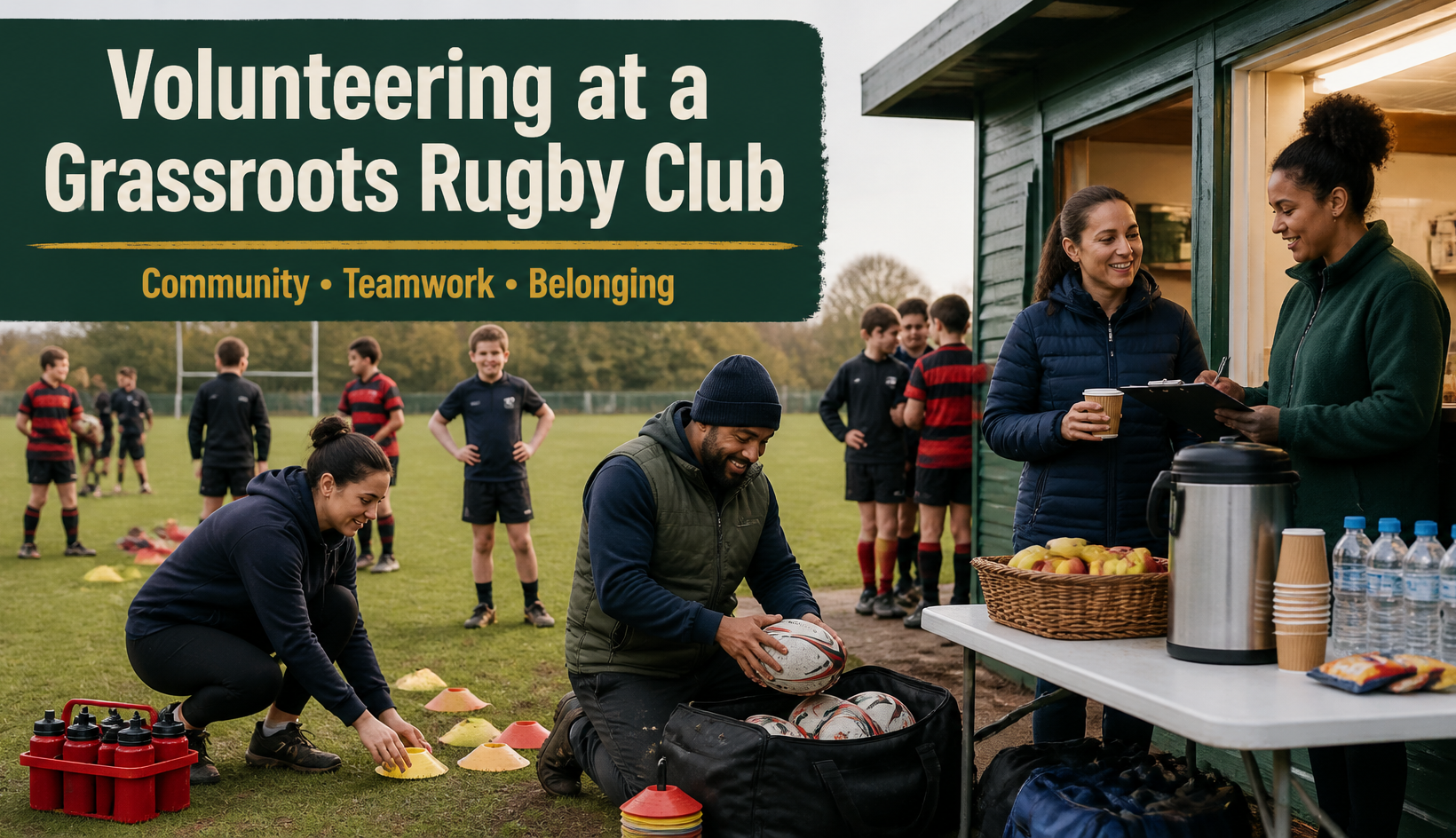
Behind every grassroots rugby match is a team that rarely appears on the scoresheet. Someone marks the field, someone washes the jerseys, someone runs the canteen, and someone stands on the sideline with a first aid kit. These people are volunteers, and without them, community rugby simply would not exist.
If you have ever thought about helping at your local club, this guide explains what volunteering involves, the roles available, the checks and training you may need, and how to get started in a way that fits your time and skills.
Why Volunteers Matter in Community Rugby
Professional rugby has paid staff for almost every task. Grassroots clubs do not. Most amateur clubs run on small budgets, and nearly every job, from coaching juniors to managing club finances, is done by people giving their time for free.
Volunteers help clubs:
- Keep costs down, so registration fees stay affordable for families
- Run match days smoothly and safely
- Develop players through coaching and mentoring
- Build community through social events and fundraising
- Protect club history by keeping records and traditions alive
Many long-standing clubs owe their survival to a handful of people who stayed involved for decades. Their work often matters as much as any premiership.
Common Volunteer Roles
There is a role for almost every skill set. You do not need to have played rugby to make a big contribution.
| Role | Main Tasks | Time Commitment |
|---|---|---|
| Coach or assistant coach | Plan and run training, guide players on match days | High, weekly through the season |
| Team manager | Communicate with players or parents, organise team sheets | Medium, weekly |
| First aid or sports trainer | Treat minor injuries, manage player welfare | Medium, match days and some training |
| Canteen and bar helper | Serve food and drinks, handle cash or card sales | Low, rostered shifts |
| Ground and equipment helper | Set up posts, flags, and pads, look after gear | Low to medium |
| Committee member | Finance, sponsorship, governance, planning | Medium, regular meetings |
Behind-the-Scenes Roles
Some of the most valuable jobs never happen on the field. Clubs often need help with:
- Social media, photography, and website updates
- Writing newsletters and match reports
- Finding and looking after sponsors
- Organising fundraising nights and end-of-season events
- Keeping registration records and membership lists
If you have professional skills in marketing, accounting, design, or event planning, your club will almost certainly have a use for them.
Checks and Training You May Need
Volunteering in sport comes with responsibilities, especially when children are involved. Requirements depend on your country, state, and role, but these are the most common.
Child Safety Checks
Anyone who works with junior players will usually need a working with children check or the local equivalent. In Australia, each state runs its own scheme. In Victoria, for example, the Working with Children Check is free for volunteers. Clubs will also expect volunteers to follow their child safety policies and codes of conduct.
Coaching Courses
National rugby bodies offer coaching courses, many of them online, that cover safe tackling, skill development, and age-appropriate games. Junior coaches are often required to complete an entry-level course before running sessions.
First Aid and Concussion Awareness
Sports trainers and first aid volunteers usually need a recognised first aid qualification. Rugby also places strong emphasis on concussion awareness, and many unions provide short courses so volunteers can recognise warning signs and remove a player from play when needed.
Other Training
- Responsible service of alcohol for anyone working at a club bar
- Food safety training for canteen volunteers
- Referee courses for those who want to officiate
Many clubs help cover the cost of courses, so ask before you pay out of your own pocket.
A Typical Match Day for a Volunteer
If you are wondering what volunteering actually looks like, a home match day gives a good picture. Tasks often follow a simple pattern:
- Early morning: unlock the clubrooms, put up post pads and corner flags, and set out water bottles
- Before kick-off: welcome the visiting team and referee, and check the first aid kit is stocked
- During games: run the canteen, sell raffle tickets, act as a touch judge, or support the medical team
- After the final whistle: pack away equipment, collect jerseys for washing, and help with post-match food
- Evening: share results and photos on the club’s social media pages
Most volunteers only cover one or two of these jobs, which is why a large group of helpers makes each person’s load much lighter. Even a two-hour shift on one Saturday a month can make a noticeable difference.
Benefits of Volunteering
Volunteering is not only about giving. It also brings real rewards:
- Friendships: clubs are among the best places to meet people in a new area
- Skills: leadership, communication, and organisation that help in work and life
- Health: being active, outdoors, and part of a community supports wellbeing
- Purpose: seeing young players grow in confidence is deeply satisfying
- Career value: volunteer experience can strengthen a resume or job application
For newcomers to a city, including migrants, joining a club as a volunteer can be one of the fastest ways to feel at home.
How to Get Started
- Contact your local club. Email the club, message its social media page, or speak to someone at training.
- Be honest about your time. Tell the club how many hours you can realistically offer.
- Start small. A single canteen shift or match-day setup is a good first step.
- Complete required checks. Apply for any child safety checks early, since processing can take time.
- Register with the club. Some clubs and unions ask volunteers to register so they are covered by insurance.
- Ask for guidance. Experienced volunteers are usually happy to show newcomers the ropes.
Avoiding Volunteer Burnout
Grassroots clubs often rely too heavily on a few dedicated people. Over time, this can lead to burnout, where volunteers become exhausted and step away completely.
To keep volunteering enjoyable:
- Set clear limits on your time and stick to them
- Share tasks rather than taking on everything yourself
- Use rosters so the same people are not always on duty
- Take breaks between seasons
- Speak up early if a role becomes too much
Clubs can help by thanking volunteers regularly, recognising their work at events, and creating simple handover notes so roles are easy to pass on.
How Clubs Can Attract More Volunteers
If you are already involved in running a club, a few simple steps can bring in new helpers:
- Break big jobs into small, clearly defined tasks
- Ask people directly, since many wait to be invited
- Involve parents of junior players early in the season
- Welcome former players back in coaching or mentoring roles
- Celebrate volunteers during events such as National Volunteer Week
Final Thoughts
Volunteering at a grassroots rugby club is one of the most practical ways to support your community. Whether you coach, manage a team, run the canteen, or help with social media, your time keeps the game affordable and alive for the next generation. Start with a small role, complete any required checks, and you may find the club becomes one of the most rewarding parts of your week.

Jante Smith is a creative and dedicated content writer who loves turning ideas into clear and engaging stories. She writes blog posts and articles that connect with readers. She ensures every piece of content is well-structured and easy to understand. Her writing helps our brand share useful information and build strong relationships with our audience.