
History of Kiwi Hawthorn Rugby Club
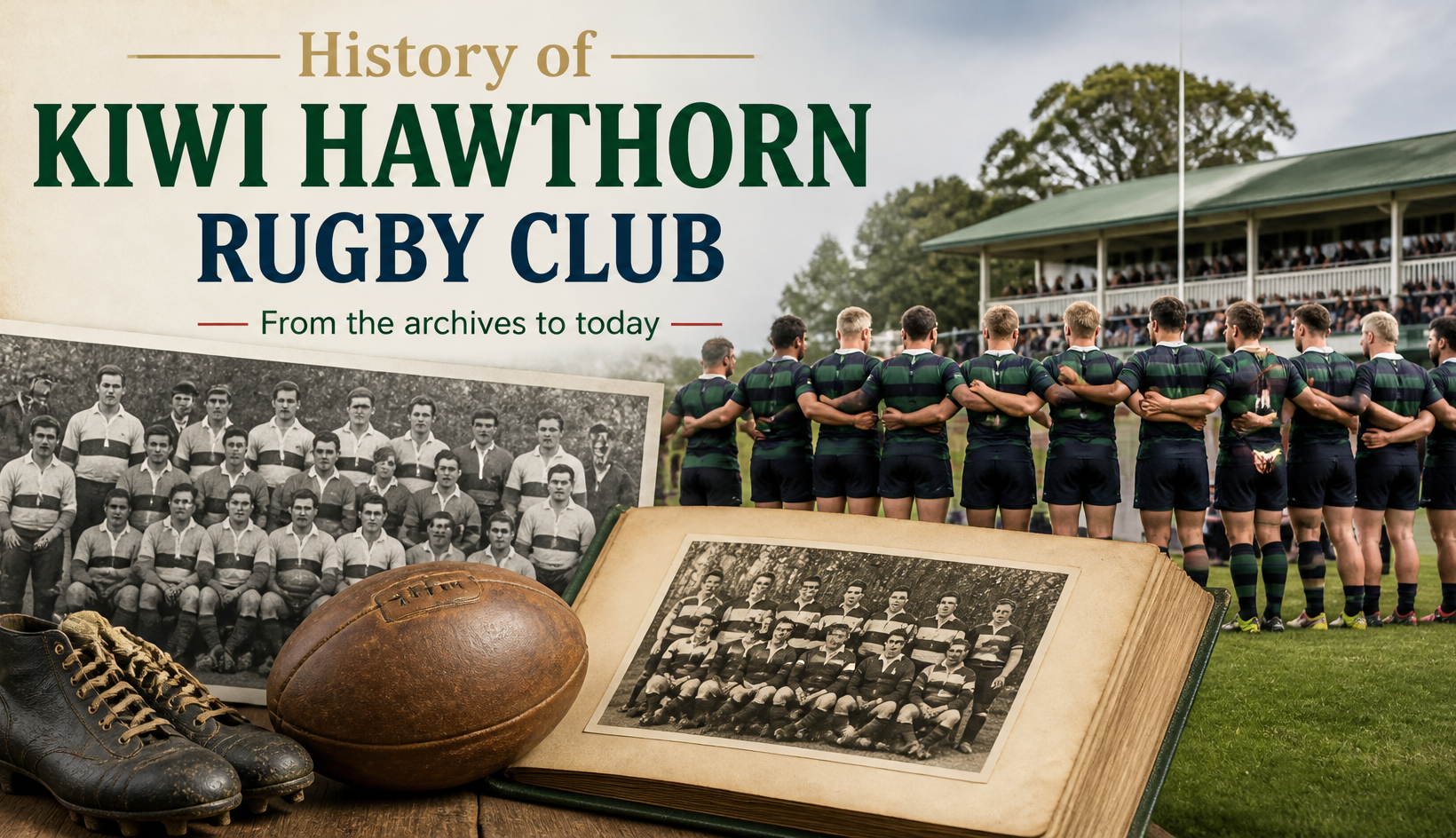
Few rugby clubs in Victoria can match the story of Kiwi Hawthorn Rugby Club. Founded more than a century ago by New Zealanders far from home, the club grew into one of the most successful sides in the history of Melbourne rugby, produced Wallabies, survived mergers and name changes, and has now returned to the top flight of Victorian club rugby.
This article traces the club’s journey from its earliest days in the 1920s to the present, highlighting the people, premierships, and moments that shaped its identity.
The Founding Years of the Kiwi Club
The club began in 1923 as the Kiwi Rugby Club, formed in Melbourne by expatriate New Zealanders, including servicemen who had settled in Victoria after the First World War. Rugby was a central part of life back home in New Zealand, and these players wanted a team that reflected their own style and spirit.
At the time, rugby union in Melbourne lived in the shadow of Australian rules football. The senior Victorian competition, known as the Dewar Shield, had started in 1909, and clubs depended on small groups of committed players and volunteers. The Kiwis quickly became one of the strongest of them.
Early Success
The new club did not take long to make its mark. Within a few years of its founding, the Kiwis had become the team to beat:
- A run of three straight Dewar Shield premierships in 1927, 1928, and 1929
- Another title in 1931
- A further premiership in 1939, just before the Second World War disrupted club rugby
Five titles in little more than a decade established the Kiwis as a foundation pillar of Victorian rugby and built a reputation for tough, skillful forward play.
The Golden Era of the 1970s
If the 1920s built the club’s name, the 1970s made it legendary. Between 1970 and 1980, the Kiwis won seven Dewar Shield premierships, a period that many still describe as the club’s golden age.
| Era | Club Name | Dewar Shield Premierships |
|---|---|---|
| 1920s to 1930s | Kiwis | 1927, 1928, 1929, 1931, 1939 |
| 1970s to 1980 | Kiwis | 1970, 1971, 1972, 1976, 1977, 1979, 1980 |
| 1990s | Kiwi Hawthorn | 1993, 1996 |
The three-peat of 1970, 1971, and 1972 stands out above all. The 1970 title was reportedly sealed with a last-minute drop goal, the 1971 side went through the season undefeated, and the 1972 team included players who would go on to wear the gold jersey of Australia. Fourteen members of the 1970 premiership side also represented Victoria, showing just how much talent the club had gathered.
Wallabies From the Club
The Kiwis produced two Wallabies who were selected while still playing for the club, a rare achievement for a Melbourne club at the time:
- John Meadows, a loosehead prop who played 22 Tests for Australia between 1974 and 1983
- Doug Osborne, a winger who played three Tests in the mid-1970s
Their selection proved that players from Victorian club rugby could compete at the very highest level and gave the club lasting pride.
Characters of the Era
Club histories also remember a long list of key figures from this period, including Gerry Frost, Peter Signal, Garry Kearney, Grant Furlonger, and Paul Barnes. Frost became famous beyond rugby circles when a photograph of him tackling a protester during a match against a South African side in the apartheid era appeared in newspapers around the world.
Off the field, John Woodhouse played a huge role. He joined in 1963, served as secretary during the premiership years, and later spent seven years as president from 1975. He went on to write the club’s history book, published in 2010, and has served as patron, life member, and club historian.
The 1987 Merger With Hawthorn
By the 1980s, many amateur clubs in Melbourne faced the same challenges: rising costs, shifting player numbers, and pressure on grounds. In 1987, the Kiwi Rugby Club merged with the Hawthorn Rugby Club to form Kiwi Hawthorn.
Hawthorn had its own history. It began as Old Scotch Boys, a club founded by former students of Scotch College, before taking on the Hawthorn name. The merger brought together the New Zealand roots of the Kiwis and the local Melbourne base of Hawthorn, creating a stronger and more stable club.
Success After the Merger
The combined club continued to win. Kiwi Hawthorn claimed Dewar Shield premierships in 1993 and 1996, bringing the club’s total to 14 first-grade titles, widely cited as a record for Victoria’s premier division. The club also collected junior honours during this time, including Under 18 and Colts premierships.
Name Changes and Changing Times
When local councils in Victoria were restructured in the 1990s and Hawthorn became part of the new City of Boroondara, the club also adopted the name Boroondara Rugby Club for a period. The Kiwi Hawthorn name was later restored, and it remains the name used by the club and by Rugby Victoria today.
These years were not always easy. Like many amateur clubs, Kiwi Hawthorn went through periods of lower numbers and spent time outside the top division. The club relied on long-serving volunteers and coaches, such as senior rugby director Scott Baker, who has been involved for around four decades.
Home Grounds
The club has used several grounds in Melbourne’s east over the years:
- Auburn High School served as home for around 30 years
- The COVID-19 period forced the club to move
- It returned to Lewin Reserve in Glen Iris, one of its original home grounds, which is now its permanent base
Moving back to Lewin Reserve gave the club a sense of continuity, linking current players with the generations who played there before them.
The 50th Anniversary and Centenary
In 2021, the club marked the 50th anniversary of its 1970 to 1972 premiership run, bringing together former players for a reunion and celebrating their legacy. Two years later, in 2023, Kiwi Hawthorn reached its centenary, a milestone few Victorian rugby clubs have achieved.
These celebrations helped reconnect past and present members and gave the club fresh momentum to rebuild on the field.
Return to the Dewar Shield
In December 2024, Rugby Victoria confirmed that Kiwi Hawthorn would return to the Dewar Shield for the 2025 season. The decision followed a review of the club’s on-field and off-field plans, which had to show that it could compete in a sustainable way. The club pointed to a growing group of committed players and a clear plan for the future.
The return marked a major moment for a club that had always seen itself as part of the top tier. Today, Kiwi Hawthorn is once again listed among the clubs in Victoria’s premier competition, alongside sides such as Melbourne University, Box Hill, Footscray, Moorabbin, and Melbourne Unicorns.
What Makes the Club Special
Beyond trophies, the club’s story is built on a few lasting qualities:
- A strong New Zealand heritage that still shapes its identity
- A culture of loyalty, with volunteers serving for decades
- A record of developing state and international players
- The resilience to survive mergers, moves, and lean years
Final Thoughts
The history of Kiwi Hawthorn Rugby Club is a story of migrants who brought their game to a new city and built something that lasted more than a hundred years. From the early titles of the 1920s to the golden 1970s, the merger with Hawthorn, and the return to the Dewar Shield, the club has remained a proud part of Victorian rugby. Its next chapter will be written by a new generation at Lewin Reserve.

Jante Smith is a creative and dedicated content writer who loves turning ideas into clear and engaging stories. She writes blog posts and articles that connect with readers. She ensures every piece of content is well-structured and easy to understand. Her writing helps our brand share useful information and build strong relationships with our audience.